
Governance
Strengthening Governance:
A Continuing Commitment
At Eureka Forbes, the Company believes that strong corporate governance is essential to building trust and sustaining long-term success. The Company’s governance framework promotes accountability, transparency, and ethical decision-making across the organisation, ensuring that the Company operates with integrity in all its interactions.
Governance is not viewed by the Company as a static achievement but a continuing commitment: one that is revisited, reinforced, and strengthened with every passing year. By maintaining robust oversight and responsible business practices, the Company strives to create lasting value for its stakeholders while supporting sustainable growth. The Company continuously strengthens its governance standards to align with evolving regulations, emerging best practices, and its commitment to conducting business with fairness, responsibility, and professionalism.
Governance at Every Level
- Provides strategic stewardship and direction
- Drives sustainable value creation
Board of Directors
- Oversees governance, risk, and compliance
- Safeguards stakeholder interests and trust
- Provide focused oversight across key governance areas
- Strengthen risk management and internal controls
Board Committees
- Review critical policies, performance, and disclosures
- Support informed and effective Board decision-making
- Executes strategic priorities and business plans
- Leads operational excellence and resource optimisation
Executive Management
- Drives innovation, growth, and organisational performance
- Ensures compliance with policies and regulatory requirements
The Board Leads
Strengthening governance begins at the top. The Board of Directors bears ultimate accountability for steering the Company towards its long-term strategic objectives while safeguarding the interests of all stakeholders. Beyond oversight, the Board actively monitors the development and execution of business plans, capital expenditure, performance targets, and risk management frameworks, ensuring every material decision remains anchored to the Company’s goals.
Drawing on structured, periodic updates spanning financial performance, regulatory developments, risk assessments, and CSR progress, the Board identifies emerging opportunities, anticipates risks before they crystallise, and provides sharp, considered direction to the management.
In doing so, the Board functions not as a passive reviewer but as an active architect of the Company’s future, bringing independent judgement, collective experience, and strategic foresight to every consequential decision the Company makes. This continuing engagement is what transforms governance from a compliance obligation into a genuine, ongoing commitment.
Board Committees Deliberate
The Board is supported in its governance responsibilities by five statutorily constituted committees: Audit Committee, Nomination & Remuneration Committee, Risk Management Committee, Corporate Social Responsibility Committee, and Stakeholders’ Relationship Committee. Each Committee brings dedicated expertise and focused scrutiny to its domain, enabling the Board to draw on deeper analysis and well-considered recommendations before consequential decisions are made.
Acting as the Board’s extended intelligence, these Committees strengthen its ability to govern financial integrity, oversee executive accountability, manage enterprise risk, advance social commitments, and address stakeholder concerns, each with the rigour and attention it deserves.
Executive Management Delivers
The Executive Management serves as the bridge between the Board’s strategic vision and the Company’s day-to-day reality. Entrusted with translating direction into action, the Management drives cross-functional coordination, upholds a culture of accountability, and ensures that execution remains aligned with the Company’s long-term objectives at every level of the organisation.
The Executive Management also plays an active role in the Board’s governance processes, most notably by participating in Risk Management Committee meetings, where they provide granular insights, operational context, and ground-level intelligence on key risks. This direct engagement ensures that Board-level risk deliberations are informed by those closest to the business, resulting in sharper oversight and more grounded decision-making that evolves with the organisation’s needs.
Board Architecture in FY26
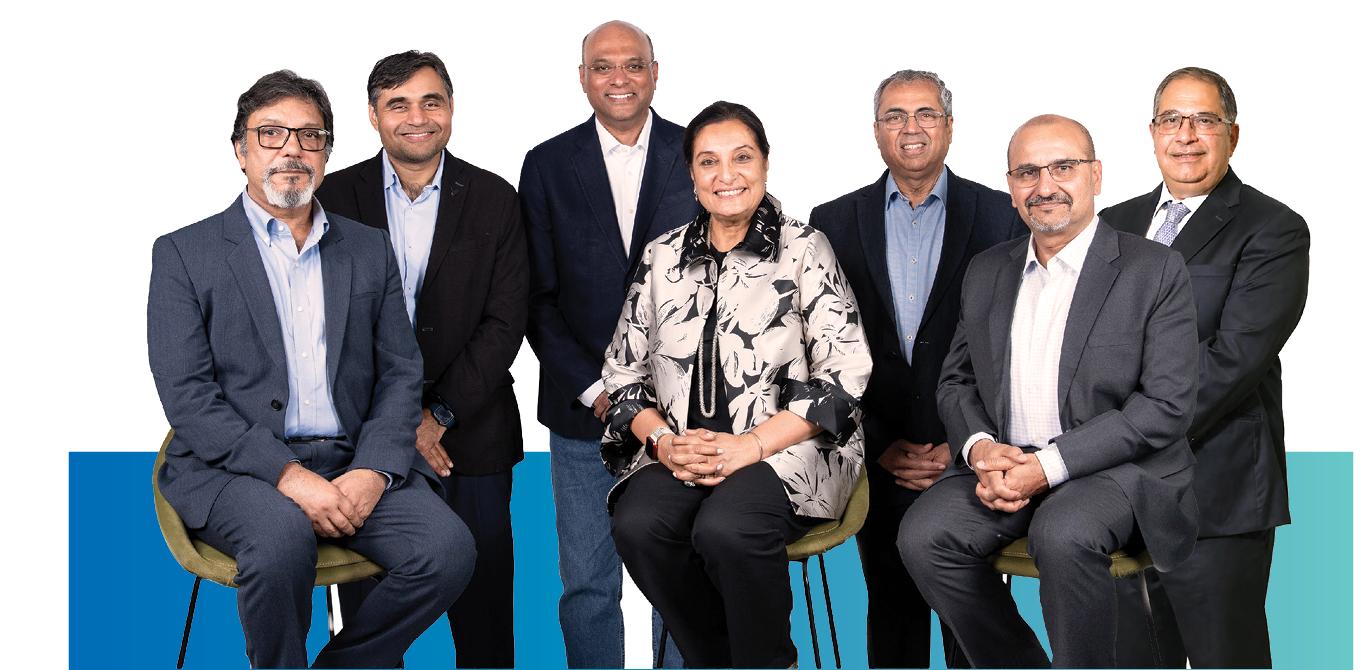
As of March 31, 2026, the Company’s Board comprises seven Directors, with an optimal mix of Executive and Non-Executive Directors, including one Woman Director. 57% of the Board consists of Independent Directors, ensuring strong, unbiased oversight. The composition of the Board conforms with Regulation 17 of the SEBI Listing Regulations, read with Section 149 of the Companies Act, 2013. The Board comprises members from diverse professional backgrounds with expertise across strategy, finance, legal, governance, technical, and operational domains, ensuring robust governance and decision-making.

4 out of 5
Committees Chaired by an Independent Director

57%
Independent Directors as on March 31, 2026

100%
of Directors Affirmed Compliance with the Code of Conduct

92%
Overall Board Committee Attendance

100%
of Designated Persons Completed the Digital Insider Trading Training
Board Evaluation
The Company has established a structured and comprehensive framework for the annual evaluation of the Board, its committees, and individual Directors. The evaluation process is designed to assess the effectiveness of the Board’s functioning, governance practices, strategic oversight, and overall contribution to the Company’s long-term success.
The Company believe that the collective effectiveness of the Board significantly impacts our performance. Therefore, the Board’s performance is closely assessed based on the roles and responsibilities outlined in the statute and the Company’s policy. The Board evaluation process provides an opportunity to identify greater efficiencies, maximise strengths, and highlight areas of further development, enabling the Board to continually improve its performance and effectiveness.
Board Committees
| Name of the Committee | Total Members | Independent Directors | Woman Director | Number of Meetings | Percentage of attendance |
|---|---|---|---|---|---|
| Audit Committee |

|

|

|

8 |
100 |
| Stakeholder Relationship Committee |
|
|
|
1 |
100 |
| Corporate Social Responsibility |
|
|
|
3 |
92 |
| Nomination & Remuneration Committee |
|
|
|
4 |
88 |
| Risk Management Committee |
|
|
|
2 |
80 |
Risk and Control: Two Sides of the Same Coin
AC  RMC (100% Overlap)
The Company has ensured complete overlap between the Audit Committee and the Risk Management Committee, with every member of the Audit Committee serving on the Risk Management Committee as well. This deliberate structural choice ensures that insights from financial reporting and internal controls flow directly into risk oversight, creating a single, coherent line of accountability where no gap exists.
Risk Governed from Every Angle
RMC AC | NRC | CSR | SRC
The Risk Management Committee includes members from all major Board Committees, bringing together diverse perspectives on financial, social, and stakeholder matters into one forum. This shared membership ensures that risks are assessed comprehensively and that the Board is well-equipped to respond to emerging challenges in a timely and informed manner.
Governance Reflected in Every Appointment
NRC AC | RMC | CSR | SRC
The Nomination and Remuneration Committee shares members with the Company’s other key Board committees. This ensures that leadership appointments and remuneration decisions are guided by a clear understanding of the Company’s governance, compliance, and stakeholder priorities, keeping decision-making consistent and wellinformed across the Board.
Cross-Committee Synergy: Strength Through Shared Expertise
| Name of Committees | Shared members with other committees | Name of the overlapping committees |
|---|---|---|
| Audit Committee (AC) |  |
NRC, RMC, CSR, SRC |
| Stakeholders Relationship Committee (SRC) | |
CSR, AC, NRC, RMC |
| Corporate Social Responsibility Committee (CSR) | |
SRC, AC, RMC, NRC, |
| Nomination and Remuneration Committee (NRC) | |
AC, RMC, CSR, SRC |
| Risk Management Committee (RMC) | |
AC, NRC, CSR, SRC |
Investor Engagement
The Company maintains an active and open dialogue with its investors through structured meetings, investor conferences, and analyst interactions. These engagements provide an opportunity to share updates on the Company’s business strategy, operational performance, financial results, growth initiatives, and key developments, while fostering a constructive dialogue with the investment community.
Feedback and suggestions received from investors through these interactions are carefully reviewed, and valid inputs are actively incorporated into the Company’s governance practices and strategic decisions, ensuring that investor insights translate into meaningful action. This approach enables the Company to strengthen stakeholder trust, enhance transparency, and support long-term value creation.
Insider Trading Compliances
The Company has adopted a Code of Conduct for Prevention of Insider Trading in accordance with the SEBI (Prohibition of Insider Trading) Regulations, 2015, as amended.
Beyond compliance, the Company has taken deliberate steps to build a culture of awareness and accountability among its Designated Persons, recognising that informed individuals are the strongest safeguard against insider trading violations.
Monitoring & Surveillance
The Company has established a dedicated internal portal for monitoring and tracking trades by Designated Persons. This system enables oversight of trading activity, ensures timely pre-clearance, and provides the Compliance Officer with a structured mechanism to identify and act on any irregularities promptly.
Building a Compliance-Conscious Culture
During the year, the Company undertook a series of targeted initiatives to strengthen awareness and understanding of PIT compliance obligations:
- In-person department-specific presentations were conducted, enabling teams to understand compliance expectations in the context of their specific roles and responsibilities.
- A comprehensive digital training programme on PIT compliance was rolled out, ensuring that every individual with access to UPSI is equipped with the knowledge to act responsibly.
- Periodic compliance awareness initiatives were conducted to keep employees informed of compliance expectations and support a culture of ethical and compliant behaviour
These initiatives ensure that PIT compliance is well understood across the organisation and that Designated Persons are equipped to meet their obligations with confidence.
Guiding Principles for the Code of Conduct of the Company
- Honest, fair, and ethical: Conduct business with professionalism, honesty, and integrity, ensuring all dealings are fair and transparent.
- Equality / Non-discrimination: No discrimination on grounds of race, caste, religion, colour, ancestry, marital status, gender, sexual orientation, age, nationality, ethnic origin, or disability.
- Respect for human rights, dignity, and privacy of every individual associated with the Company.
- Zero tolerance to fraud.
- Zero tolerance to bribery and corruption.
- Safeguard confidentiality and protect all confidential and price-sensitive information during and after association with the Company.
- Provide a safe, healthy, and harassment-free environment across all facilities, in compliance with applicable laws, including the POSH Act, 2013.
- Not aligned with any political party.
- Responsible advertising.
Policy Framework: The Backbone of Ethical Conduct
The Company’s Board upholds the highest standards of governance, anchored in a firm commitment to ethical practice at every level of the organisation. This commitment is given structure and substance through a comprehensive framework of policies, including the Whistleblower Policy, the Code of Conduct, and an active grievance redressal mechanism, each designed to reinforce transparency, accountability, and responsible decision-making across our operations.
POLICY MATRIX
Non-Statutory Policies

Short-Term Treasury Policy
Creche Policy
Transgender Policy
Audit Trail Policy – Financial System
IT Policy
Statutory Policies
-
1. Related party transactions
All transactions with related parties are conducted in strict adherence to applicable laws and governance standards, ensuring both transparency and equitable treatment. Decisions regarding these transactions are made by the Audit Committee, which actively engages in deliberations.
-
2. Strictures and penalties
During the year under review, Directors and Key Management Personnel maintained full compliance, with no regulatory actions or penalties imposed by stock exchanges, the Securities and Exchange Board of India (SEBI), or any other capital market regulatory authorities.
-
3. Donations and political contributions
In alignment with the Code of Conduct’s commitment to political neutrality, EFL maintains a strict policy against political donations and involvement in political campaigns.
-
4. Familiarisation Programme for Directors
The Company maintains a comprehensive induction and familiarisation programme designed to keep Directors well-informed and continually engaged with the business. Through regular presentations and updates at Board Meetings, Directors are kept abreast of statutory and regulatory developments, economic and market trends, peer benchmarking, and changes in laws applicable to the Company’s operations. The Managing Director and Chief Executive Officer, along with the leadership team, periodically brief the Board on the Company’s performance and strategic initiatives. Reflecting our commitment to collective oversight, all Board members attend every Committee meeting, regardless of their specific Committee membership, ensuring shared awareness and informed participation across the Board. Risk Management Committee meetings are additionally attended by senior management, providing the Board with deeper insight and context on key risks facing the organisation.