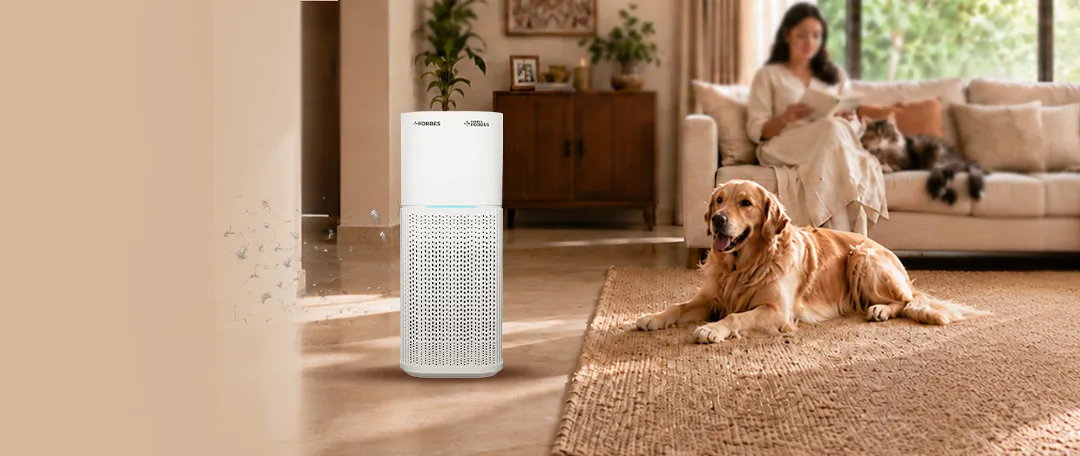
If You Have Pets at Home, Here's What to Look for in an Air Purifier
PUBLISHED ON: 06-Aug-2026
Key Takeaways:
- Pets introduce a variety of pollutants into the air, such as pet dander, odour and outdoor pollutants indoors.
- An air purifier with multi-stage filtration consisting of a pre-filter, true HEPA filter, an activated carbon filter and plasma filtration can help address pet-related pollutants.
- Choosing the right CADR, maintaining filters regularly and placing the air cleaner in a room where your pet spends most of its time can help ensure your indoor air remains clean.
Pets are considered human beings’ best friends. You may have seen kids convincing their parents to get a puppy because these pets bring life to a home. However, with companionship, they also bring dander, hair, and pollutants that circulate through living spaces. These particles then find their way into our noses and accumulate over time. This is something many people are not aware of. Over time, due to awareness, people are thinking of installing an air purifier at home. However, there are some people who are still in doubt as to how pets are affecting the indoor air quality.
If you are looking for the best air purifier for home, this guide will help you understand how indoor air gets affected due to pets and features to look for in a HEPA air purifier if you have pets at home.
What Pets Actually Do to Indoor Air
Pets are curious beings; you often find them running around the house chasing something, or they may cuddle you in your bed or sofa. This may look fun and entertaining. However, in this process, your pet may be introducing four categories of indoor air pollutants:
- Dander: It is a microscopic flake of dead skin shed continuously by cats, dogs, and other animals. Pet dander is quite small in size, making it enough to remain airborne for extended periods. It is one of the primary allergens, which can cause sneezing, eye irritation, or aggravate asthma.
- Pet hair: It is not itself an allergen but carries dander, which can clog the filter of an air purifier rapidly without a pre-filtration stage to intercept it.
- Odour: It comes from ammonia and other volatile organic compounds (VOCs) in pet urine, saliva, and bodily secretions. These are gaseous pollutants, which may continue to linger in the room if your air purifier doesn’t have a filter that is designed to capture these gaseous pollutants.
- Outdoor pollutants: They are tracked in on fur. Pets that go outside return carrying pollen, mould spores, and dust. These particles are then introduced into the indoor environment.
Factors to Look for in an Air Purifier When You Have Pets at Home
Before choosing the right air purifier for pet households, certain factors need to be considered, such as:
1. Filtration System
The filtration stack is the most important consideration, and it must address particulate, hair, and gaseous pollutants simultaneously.
A multi-stage filtration system is a benchmark consisting of:
- Pre-filter: This is the first stage, which intercepts pet hair and large particles before they reach the main filter. Without it, pet hair can clog the HEPA filter rapidly and shorten its lifespan.
- True HEPA filter: The second stage is a True HEPA filter, rated H13 or H14 under EN 1822. This air filter captures particles as small as 0.3 microns at 99.97% efficiency, sufficient for dander and airborne allergens. Filters labelled "HEPA-type" or graded H10–H11 do not meet this threshold.
- Activated Carbon Filter: The third stage is an activated carbon filter for odour and VOCs. The distinction that matters here is between a granular activated carbon bed and a thin carbon mesh coating applied to another filter. The latter provides negligible odour control. For a pet household, a dedicated carbon layer is essential, and it will need replacing more frequently than in a non-pet home.
- Plasma Filtration: This is an added layer of protection against airborne contaminants.
2. CADR Rating and Room Coverage
CADR measures how swiftly a purifier cleans a given volume of air, expressed in m³/hr. It should be matched to the room where pets spend the most time.
For households with pets, the standard recommendation of 4-5 air changes per hour is insufficient. Pets shed continuously, so the pollutant load is constant. Target 5-6 air changes per hour, or select a unit rated for a larger room than the actual space, to ensure the purifier keeps pace.
3. Build Quality and Maintenance
Two factors overlooked at purchase become significant over time.
A sealed system design forces air through the filter stack rather than around it. A poorly sealed housing allows unfiltered air to bypass the filters, making the rated filtration performance irrelevant in practice.
Filter replacement costs should be evaluated before purchase. In homes with pets, an air filter for the home may demand more frequent changes. A HEPA filter that lasts 6-12 months elsewhere may need frequent replacement. Similarly, other filters may require frequent change.
4. Noise Level
A purifier in a household with pets runs for extended periods. At higher fan speeds, noise is a practical concern, particularly for cats, which are sensitive to sustained ambient sound.
Eureka Forbes provides a comprehensive list of air purifiers that may be suitable for your home, even if you have a pet.
1. Forbes Air Purifier 230 Surround 360: An air purifier drawing air from all sides and providing clean air consistently.
- Equipped with 4-stage filtration consisting of a pre-filter, HEPA filter, activated carbon filter and plasma filtration technology.
- Comes with a long filter life of approx up to 2 years, depending on the daily use and environmental conditions.
- Contains timer mode, providing 2-hour, 4-hour, 6-hour or 8-hour timer settings for convenient and energy-efficient use.
- Comes with a filter change indicator, indicating when the filter should be replaced.
2. Forbes Air Purifier 355 Surround 360: An air purifier that has the ability to clean air in just 10 minutes.
- Draws air from all sides, capturing bacteria, dust, allergens and odours from all directions.
- Equipped with a 4-stage filtration system consisting of a pre-filter, HEPA filter, an activated carbon filter, and plasma filtration technology.
- Ideal for room sizes up to 480 sq.ft.
- Comes with a digital display indicating 2.5 concentration indoors.
Additional Tips to Ensure Clean Air
- An air purifier works on what is airborne. It will not eliminate dander already settled into upholstery, carpets, or bedding.
- Regular grooming reduces the volume of air entering the airways.
- Vacuuming with a HEPA-equipped vacuum cleaner can help remove settled allergens from surfaces.
- Washing pet bedding weekly reduces the concentration of pet dander at ground level.
Conclusion
For pet owners, an air purifier is a functional investment in the health and comfort of everyone in the home. The right unit must address particulate, hair, and odour through a properly staged filtration system, deliver sufficient CADR for a continuously shedding environment, and hold up to the demands of a pet household over time.
Prioritise a True HEPA H13/H14 filter, a genuine activated carbon layer, a washable pre-filter, and a CADR rating that accounts for constant shedding, and the difference will be noticeable.
Frequently asked questions (FAQs)
How often should I run an air purifier if I have pets at home?
Continuously. Pet dander and hair enter the air at a constant rate, not just when the room is occupied. Running the purifier on a low to medium setting can deliver the best results.
Can one air purifier cover the entire home?
No. A purifier cleans the air only in the room it is placed in. For multi-room homes, prioritise the room where pets spend the most time and add a second unit if needed.
Is an air purifier enough to manage pet allergies at home?
Not on its own. It reduces airborne allergens effectively, but settled dander in carpets and upholstery requires regular vacuuming and grooming. Both approaches together make a meaningful difference.
