Tips on How to Purify Air in Your Home
PUBLISHED ON: 05-Nov-2026
Key Takeaways
- Ensure proper ventilation in your home when outdoor air quality is fine and reduce indoor pollution sources.
- Regularly clean dust from surfaces, manage indoor humidity levels, and invest in a good air purifier with HEPA filtration.
- Consider filter maintenance requirements and replacement costs.
Clean air is more important to our well-being than we realize. It boosts physical health, enhances sleep quality, reduces the risk of allergies and respiratory illnesses, supports mental health, and improves overall quality of life. But as air pollution rises, even the air we breathe inside our homes is often contaminated. Moreover, everyday activities like cooking and cleaning can also introduce airborne particles into your surroundings.
5+ Tips to Purify Air in Your Home
While regular vacuuming and mopping can help keep pollutants at bay, it isn’t always sufficient. In this article, we will cover some essential tips on how to purify air in your home.
1. Ventilate at the Right Times
Earlier, homes used to be designed to keep ventilation in mind. Big windows, open verandas, and spacious terraces were all built to ensure the house stays ventilated throughout. This is because a well-ventilated space ensures better air circulation, reduced humidity, and moisture control. However, the timing matters, and here are some things to keep in mind:
- Check Air Quality: Before opening windows, be sure to check the AQI. If the pollution levels are high, ventilation will do more harm than good. In such cases, it is better to use an air purifier, such as the Eureka Forbes 230 Surround 360° Air Purifier, which comes with a True HEPA H13 air filter that can capture microscopic particles and microbes as small as 0.1 μm, delivering medical-grade air purification.
- Ventilate During Cooking: During cooking, always use an exhaust fan or chimney to remove smoke, fumes, and cooking-related pollutants.
- Allow Fresh Air Circulation: When the AQI is suitable, open windows or doors on opposite sides of the home to allow cross-ventilation, especially during hot and humid weather.
Additionally, consider exterior conditions like construction debris and traffic emissions, as ventilation works best when outdoor air is cleaner.
2. Reduce Indoor Pollution Sources
Although pollution affects the air quality within our homes, there are several everyday activities that also spread pollutants. These include:
- Indoor Smoking: Any kind of smoking, especially tobacco consumption, releases harmful chemicals, carcinogens, and heavy metals into the air.
- Cooking Emissions: Everyday cooking, particularly deep frying and high-temperature food preparation, releases microscopic airborne particles. Moreover, gas stoves and LPG emit smoke and gases that can affect the indoor air quality.
- Household Products: Certain cleaning supplies release volatile organic compounds (VOCs), whereas paints and varnishes release chemical fumes during application. Similarly, air fresheners and scented candles are loaded with synthetic fragrances.
It is also crucial to address any mold buildup and dampness in your home. The Eureka Forbes 355 Surround 360° Air Purifier comes with an activated carbon filter that absorbs odors, VOCs, and cigarette smoke effectively.
3. Clean Surfaces and Floors Regularly
Everyday dust, loose hair, pet dander, and other fine particles tend to accumulate on floorings, furniture, bedding, carpets, and even curtains. This settled dust can easily become airborne again, making regular cleaning essential. Use a damp cloth to wipe surfaces, as using dusters only re-releases dust into the air. Vacuum floors and carpets frequently to get rid of dust, hair, and debris trapped in fibers.
Curtains, cushion covers, and bedding material should be washed periodically according to their care instructions. Clean beneath furniture, around window frames, and in corners where dust goes unnoticed. Kitchen exhaust and air purifier filters should also be regularly maintained and replaced.
4. Control Indoor Humidity
Humidity affects air quality and can even cause mold growth and dust mites over time. Excess moisture is most common in bathrooms, kitchens, and poorly ventilated rooms. You can manage indoor humidity by using exhaust fans, kitchen chimneys, and dehumidifiers. However, it is also important to monitor and address any leakage issues promptly, as these can quickly turn problematic.
The Eureka Forbes Aeroguard AP 175 Air Purifier includes an activated carbon filter to help absorb everyday odors, cooking smells, smoke, and VOCs, helping keep indoor air fresher.
5. Use an Air Purifier with HEPA Filtration
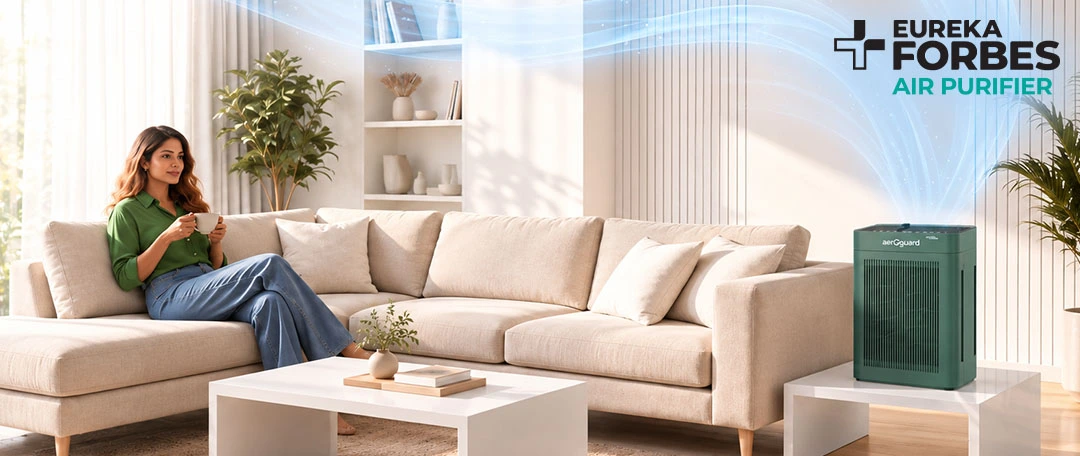
Even with regular cleaning, ventilation, and humidity management, some airborne particles can remain suspended in indoor air. An air purifier can help reduce these particles by drawing in polluted air from all directions and releasing clean air back into the room. Eureka Forbes offers a range of air purifiers with a True HEPA H13 filtration system, which filters ultra-fine particles like pollen, mold, microbes, and allergens for cleaner air.
Models like the Smart 355 Surround 360° Air Purifier also provide advanced 4-stage purification using a pre-filter, activated carbon filter, True HEPA H13 air filter, and plasma filtration to remove up to 99.97% of particulate matter as small as 0.1 μm.
However, it is also important to consider your room size and the air cleaner’s coverage before deciding which is the best air purifier for home use.
6. Factor in Filter Maintenance and Cost
An air purifier’s performance also depends on how well you maintain its filtration system. Following the correct process to clean an air purifier can also help maintain its performance. Over time, filters collect dust, debris, and fine particles that affect their performance. Thus, before purchasing an air cleaner, consider its maintenance needs and costs. For instance, the 230 Surround 360° Air Purifier model has a longer filter life of up to 2 years, ensuring months of fresh air with fewer filter replacements. It also comes with a filter change indicator that notifies you when it’s time to replace the filter for optimal performance.
Lastly, check whether compatible replacement filters are readily available for your preferred air purifier. Eureka Forbes offers model-specific replacement filters on its official website.
By choosing a model suited to your space and ensuring upkeep, you can make indoor air quality management hassle-free!
Frequently Asked Questions (FAQs)
Can I purify indoor air without an air purifier?
While you can improve indoor air quality with some preventive practices, an air purifier provides 360° filtration and helps eliminate harmful microbes.
What's the ideal indoor humidity level for air quality?
A relative humidity level of around 30-50% is typically considered ideal for most homes.
How do I know what size air purifier I need?
Check the floor area of your room or home and compare it with the air purifier’s recommended coverage for effective air filtration.
How often should HEPA filters be replaced?
Replacement frequency varies by model, usage, and indoor air quality. Always follow the recommended schedule and filter-change indicator.
