What Are the Differences Between Pre-Filter and Sediment Filter in RO Systems?
PUBLISHED ON: 07-Nov-2026
Every glass of clean drinking water passes through multiple stages of purification before reaching you. Many people wonder why an RO water purifier needs both a pre-filter and a sediment filter. While they might sound identical, each filter handles a specific characteristic.
This article covers the differences between these two filters to ensure that you get optimal water flow, extended filter life, and reap the best benefits from your investment.
What a Pre-Filter Actually Covers
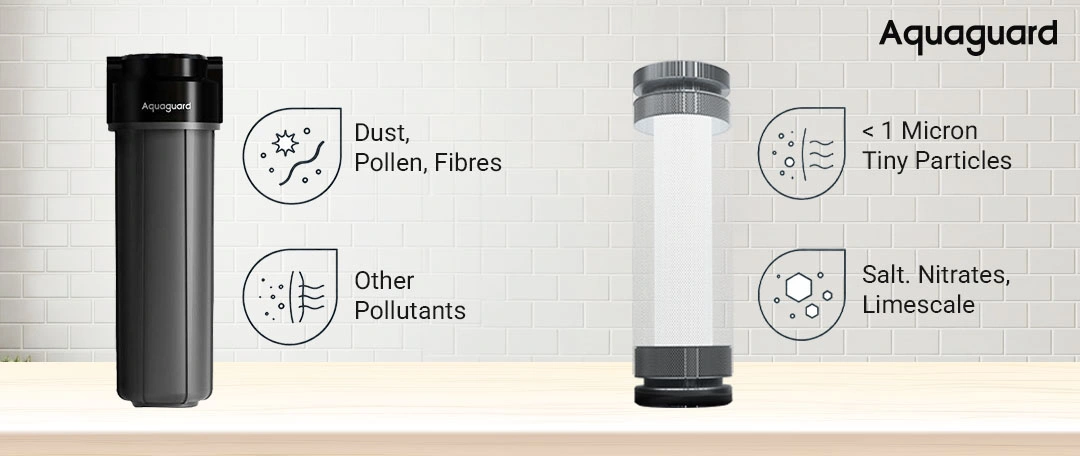
Aquaguard Pre Filter is designed to remove suspended particles from your water, providing enhanced filtration for cleaner, safer drinking water.
It helps enhance the performance and durability of other filters in the water purifier. As raw tap, borewell, or tanker water flows into the purifier, it traps visible sand, heavy mud, suspended rust flakes, and large debris.
With genuine Eureka Forbes cartridges, the pre-filter ensures long-lasting performance up to 6000 litres, which helps extend the life of your filters.
Sediment Filter Specifically Does
While the pre-filter catches physical debris, a Mega Sediment Filter removes fine dust, dirt, and mud particles from water, which prevents clogging. This thus extends the life of internal filters.
In Eureka Forbes water purifiers, you will find a Mega Sediment Filter in most of the water purifiers. Some of them are Aquaguard Sure Hydra 2X RO+UV+UF Water Purifier, Aquaguard Aspire Nova Pro 2X RO + UV Stainless Steel IOT water Purifier, and others.
The internal Mega Sediment Filter features high-density multi-layered media designed to trap micro-particles that pass straight through basic pre-filters. It handles smaller suspended solids, fine dust, and floating mud particles.
The Mega Sediment Filter clears up water turbidity by removing microscopic silt, fine rust particles, and suspended organic matter. This thorough clearing process prevents fine grit from prematurely clogging downstream carbon stages like the Chemi-Block and protects delicate RO membranes from surface damage. At the same time, it ensures that the water entering final purification stages is completely clear, keeping your purifier running efficiently and extending the overall life of internal components.
Why the Distinction Matters for Filter Life
The RO membrane relies on microscopic pores to block dissolved heavy metals, microplastics, and hard salts. However, the membrane is vulnerable to physical fouling if exposed to abrasive grit:
- Protecting the Main Filter: The external pre-filter absorbs the heaviest physical load, so internal filters do not get overwhelmed.
- TDS vs Physical Load: Neither the pre-filter nor the sediment filter reduces Total Dissolved Solids (TDS). Both exist solely to manage insoluble physical particles.
- Cost Savings and Longevity: When external and internal sediment stages work together, advanced purification stages like Aquaguard NanoPore Long-life offer up to 2 years* of filter life.
What to Check When Comparing Filters
When evaluating models to find the best water purifier in India, consider these practical component and pricing factors:
- Pre-Filter Inclusion: Check whether the unit includes an external Aquaguard Pre Filter Assembly out of the box or if your water turbidity requires adding one.
- Filter Specifications: Look for systems combining an external pre-filter with an internal Mega Sediment Filter and Chemi-Block for complete physical pre-treatment.
To keep your drinking water safe and your appliance warranty valid, always buy replacement parts directly from the official website for Eureka Forbes Genuine Filters. Ordering through the website ensures you receive only Genuine Aquaguard filters and installation by an expert at your doorstep.
Conclusion
Every stage in a modern RO system serves a dedicated purpose in delivering safe drinking water. A wall-mounted pre-filter keeps heavy silt out of your purifier’s internal plumbing, while the internal sediment filter prepares the water for chemical and membrane filtration. Ensuring both filters are routinely inspected and replaced according to your input water quality guarantees maximum system lifespan, lower maintenance expenses, and reliable daily purity for your family.
Is a sediment filter the same as a pre-filter?
No. An external pre-filter mounts on the wall outside the unit to trap coarse sand and rust. An internal sediment filter, like the Mega Sediment Filter, sits inside the cabinet to capture fine particles down to 0.5 microns.
How often should a sediment filter be replaced?
Pre-filters and internal sediment filters typically require replacement every 6 to 12 months, depending on input water turbidity and daily household usage.
What micron rating is best for a sediment filter?
An external pre-filter works best with a 5 to 50-micron rating for coarse particles. An internal sediment filter performs best at a fine 0.5 to 1-micron rating for microscopic silt.
Can an RO system work without a sediment filter?
Running an RO system without sediment filtration causes fine grit to bypass early stages. This leads to rapid clogging of carbon blocks and permanent surface fouling on the RO membrane.
