How to Measure AQI at Home
PUBLISHED ON: 16-Sept-2026
Key Takeaways
- The AQI number on your phone reflects outdoor, city-level readings. It says little about the air inside your own home.
- Poor indoor air often announces itself well before an AQI monitor does, through smell, dust buildup, or filters that clog faster than expected.
- Smart monitors and purifiers with built-in sensors provide the most reliable real-time indoor readings currently available.
- Monitoring indoor AQI becomes more important during high-pollution seasons and in homes with pets, cooking smoke, or poor ventilation.
Checking air quality index (AQI) on a phone before heading out has become routine for a lot of people, yet the air quality inside their own homes rarely gets the same attention. Indoor air can, in fact, be worse than what's outside, particularly in homes with limited airflow, regular cooking, dust, or pets.
However, there is no single correct way to measure it. A dedicated AQI monitor works well, and so does an air purifier with a built-in sensor. What matters more is choosing an option that fits your home and knowing what to do with the reading once you have it, rather than just checking a number and moving on.
What Is AQI and Why Does It Matter Indoors
AQI, short for Air Quality Index, is a tool used by government agencies to measure how polluted outdoor air is. India's Central Pollution Control Board (CPCB) scale runs from 0 to 500 across six categories, ranging from Good to Severe.
Indoor spaces, however, have pollutant sources that outdoor monitoring may not capture. Cooking smoke, dust, mould, and even some cleaning products can push indoor pollutant levels well past outdoor readings, especially in sealed, air-conditioned rooms where airflow is minimal.
Public AQI data comes almost entirely from outdoor monitoring, which means it says nothing about the air you're actually breathing indoors.
Signs Your Indoor Air Quality May Be Poor
Certain signs tend to show up long before anyone owns an AQI monitor, such as:
Persistent Musty Odours
A musty smell that lingers despite regular cleaning usually points to mould, mildew, or trapped moisture somewhere in the room, even before anything becomes visible.
Frequent Sneezing or Congestion Indoors
Sneezing or a blocked nose that eases the moment you step outside may indicate that indoor air is carrying more allergens or irritants.
Dust Settling Quickly After Cleaning
When dust reappears on surfaces within a day or two of cleaning, that usually means the air itself is carrying a heavier particulate load, polluting indoor air. In such cases, an air purifier for a dusty room can be bought to purify indoor air.
Condensation on Windows
Moisture fogging up windows signals high indoor humidity, which can be a breeding ground for mould. Often well before any smell or visible spotting appears.
Filters Turning Grey or Clogging Faster Than Expected
An air purifier filter that darkens or needs replacing sooner than the manufacturer’s guide says is usually reacting to a heavier pollutant load than normal.
None of these signs confirms an exact AQI number on their own, but taken together, they're a strong enough hint that it's worth measuring properly.
Ways to Measure AQI at Home
Given below are some ways to measure AQI at home.
Smart Air Quality Monitors
Standalone monitors exist specifically to track indoor conditions. Most measure PM2.5 and PM10, and quite a few now extend to CO2, VOCs, and humidity, displaying readings live through a screen or a connected app.
Since these devices sit inside your home rather than at a distant monitoring station, they capture what's happening in that exact room. That matters far more for everyday decisions like when to ventilate or run a purifier. For anyone who wants ongoing, room-specific data, this is the more precise route.
Air Purifiers with Built-in AQI Sensors
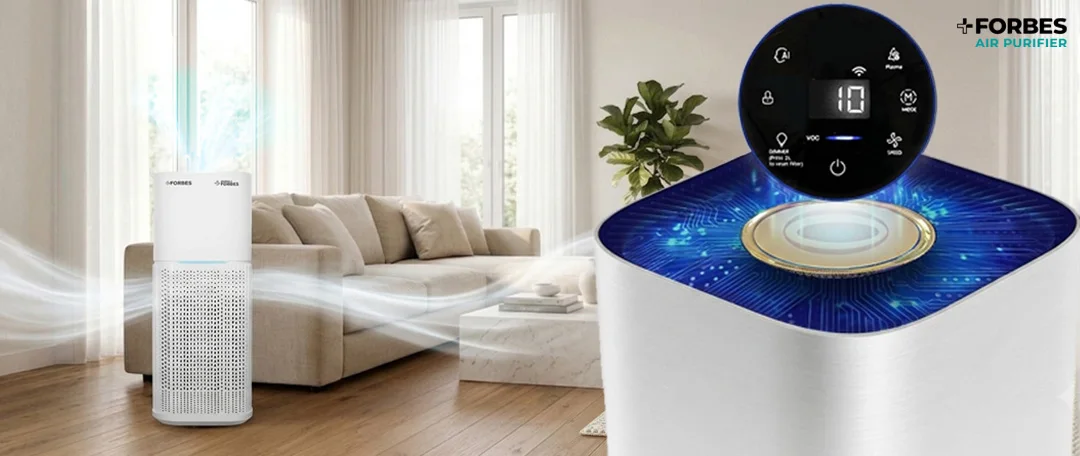
A growing number of air purifiers for homes, such as the Forbes Smart 500 Surround 360° Air Purifier, come with an AQI sensor built directly into the unit, showing a live reading or a colour-coded indicator for current air quality.
It's a practical middle ground for households that want visibility into their air without managing another standalone gadget. However, placement still matters, as a purifier pushed into a corner may not give an accurate read on air quality across the whole room.
Simple Manual Checks
Without a device on hand, a handful of manual observations can serve as a rough proxy:
- Fast-settling dust,
- Filters discolouring sooner than expected,
- Lingering odours,
- Noticeably heavy air
All these observations are worth paying attention to. None of this produces an actual number, but it's often enough to indicate whether investing in a monitor, or simply improving ventilation and cleaning habits, is overdue.
How Often Should You Check Indoor AQI
A weekly check is a reasonable baseline for most homes. A few situations call for checking more often:
- High-pollution seasons: Winter months and stretches of heavy outdoor smog tend to show up indoors too, which makes more frequent checks worthwhile. If poor indoor air quality becomes a recurring problem during these periods, it may be worth comparing features such as room coverage, filtration technology, and air purifier price before choosing a suitable model.
- Festival periods with firecrackers: Pollutant levels can spike sharply over a short window, so daily monitoring helps during these stretches.
- Kitchen usage without ventilation: The buildup of toxins through cooking without venting is faster than most people realise.
- Families with pets or smokers: These homes should get tested more often, preferably on a daily basis using a monitor with its own sensor.
- Manual checks only: Without a device, staying consistent with the same physical indicators such as dust, smell, and filter condition matters most, since sudden shifts are usually the clearest sign something has changed.
Simple Steps to Improve AQI Once You've Measured It
Once a poor indoor AQI reading is confirmed, a few consistent habits help bring it down:
- Proper ventilation: Open your windows during low levels of outdoor pollution, usually in the early morning, not when there is a lot of traffic.
- Use a HEPA air purifier: Put it in the rooms that you use most often, and make sure that air filters are changed/cleaned on time rather than waiting for blockages.
- Reduce indoor air pollution: While cooking, use an exhaust fan in the kitchen, and avoid using artificial air fresheners, which usually contain VOCs.
- Clean with the right tools: Cleaning with a HEPA-filter-equipped vacuum cleaner helps reduce the dust and allergens that contribute to poor indoor readings in the first place.
Conclusion
The AQI shown on a phone rarely matches what's actually happening inside a home, and depending on ventilation, daily habits, and who or what lives there, that gap can be considerable. Whether the method is a dedicated monitor, a purifier with a built-in sensor, or you’ve simply noticed the physical signs, measuring indoor air quality is the necessary first step. Only then does it become possible to improve it, rather than assuming the outdoor number tells the whole story.
Frequently Asked Questions (FAQs)
Is AQI the same indoors and outdoors?
No. Outdoor AQI comes from citywide monitoring stations, while indoor air quality depends on a home's ventilation, daily activities, and pollutant sources, all of which can differ substantially from the outdoor reading.
What is considered a "good" AQI number for indoor spaces?
Using the CPCB scale as a reference point, 0-50 falls under Good and 51-100 under Satisfactory. India has no separate indoor AQI standard, so these outdoor benchmarks are commonly borrowed as an indoor proxy.
Does closing windows and doors improve indoor AQI?
Sometimes. Closing windows can limit outdoor pollutants from entering during high-pollution hours, but it also traps indoor-generated pollutants, like cooking smoke and VOCs, if there's no ventilation or purification running.
Can indoor plants effectively lower indoor AQI?
Not meaningfully. Some studies show plants absorb certain pollutants, but the sheer number required to noticeably shift a room's AQI is far beyond what's practical in an average home.
Does an air purifier's AQI reading match what a dedicated monitor shows?
Not always precisely. Built-in purifier sensors are generally calibrated for broad trends rather than lab-level accuracy, so readings may vary slightly from a dedicated monitor, even if both point in the same general direction.
