How Do You Maintain a Water Purifier for Ensuring Safe Drinking Water in the Long Term
PUBLISHED ON: 03-Oct-2026
Key Takeaways
- Regular maintenance keeps your water purifier working and adds years to its life.
- Different filters such as Sediment filters, Carbon filters, RO membranes, and UV lamps wear out on their own schedule.
- Reduced flow, strange sounds and unpleasant taste usually mean your purifier needs attention before its next scheduled service.
- Genuine filters and authorised service keep the whole system performing as it should.
Your water purifier doesn't stop working just because you forget to service it. It just gets worse at its job, slowly, quietly, without telling you. Water can still look clear and taste normal while water filters clog and membranes wear thin underneath. If maintenance is overlooked long enough, both purification quality and the appliance's lifespan take the hit. The fix isn't complicated: know what needs checking and know when.
This informative guide will give you a comprehensive idea of how to maintain your water purifier for long-term use.
Why Maintenance Matters Even When Water "Looks Fine"
Here's the thing about clear water: it tells you almost nothing about how well your purifier is actually performing. Your filters may get saturated, membranes lose efficiency, and UV lamps keep glowing long after they've stopped disinfecting properly. None of this is visible to the naked eye. Regular maintenance is what catches this before it becomes a real problem, keeping every purification stage working the way it should and extending the appliance's life in the process.
Core Maintenance Requirements and Their Frequency
Think of your water purifier as a set of components, not one single machine. Each part does its own job. Each wears out at its own pace.
- Sediment filter: Catches dust, sand, and suspended particles before anything else in the system sees them. Generally, it is better to replace it every 6 to 8 months, depending on your water quality and usage.
- Activated carbon filter: Deals with chlorine, odour, and organic impurities. Same window, roughly 6 to 8 months.
- RO membrane: In an RO water purifier, the RO membrane removes everything filtration alone cannot remove, such as dissolved salts and heavy metals. Lasts 2 to 5 years under normal use, but TDS levels and daily usage may push that number up or down.
- UV lamp: Loses disinfection power gradually, well before it actually goes dark. Most manufacturers recommend replacing it after
Water filter replacement alone isn't the whole picture. An annual preventive service is what is needed. Herein, a technician actually opens up the purifier and checks internal components, finds out what a routine filter swap may fail to notice.
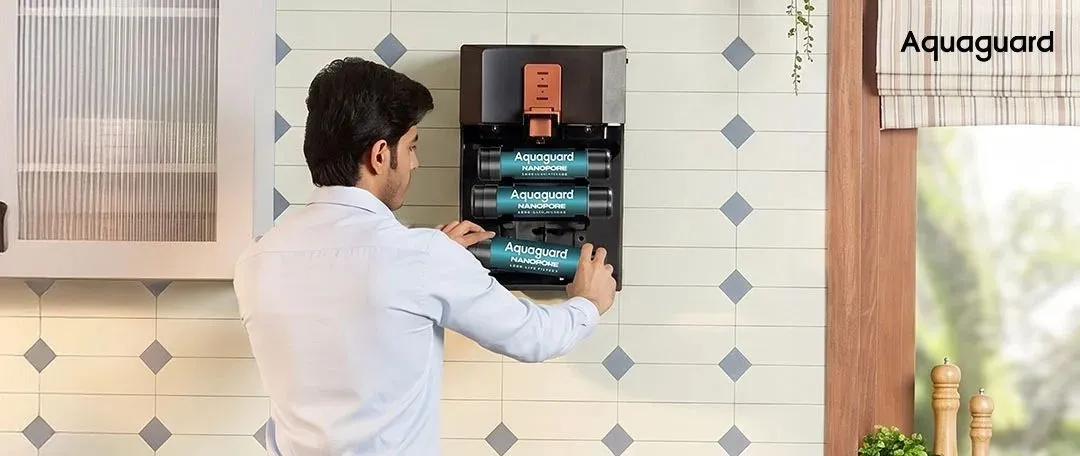
Eureka Forbes has made the maintenance of water purifiers even easier with Nanopore Long-Life Filters. These filters come with 2-year and 4-year unconditional warranty, so that you do not have to worry about service cost, filter change cost, or spare part cost for 2 years and 4 years respectively.
Signs Your Purifier Needs Attention Sooner
Given below are some of the signs that may indicate your water purifier needs attention:
Reduced water flow
A noticeable slowdown in water flow often points to the sediment filter, carbon filter, or RO membrane getting clogged with the impurities they've been trapping. It's worth getting the unit inspected before the issue progresses further.
Changes in taste or odour
An unusual taste or smell in your drinking water is typically a sign that the filters are no longer performing as they should. This is best addressed by having an authorised technician examine the unit rather than waiting it out.
Unusual noise during operation
A purifier making unfamiliar sounds during operation may be signalling an issue with internal components or water flow. Either way, it's a sign that professional inspection is needed.
Service alerts or indicator lights
Most modern purifiers come with a service indicator that flags when attention is required. Once this alert appears, scheduling maintenance promptly helps ensure purification performance doesn't decline.
Water leaks around the purifier
Leaks around pipes, connectors, or the storage tank should never be treated as minor. Left unaddressed, they can lead to further damage, so early servicing helps protect both the unit and its performance.
Seasonal changes in water quality
During monsoons or other periods when water quality fluctuates, filters tend to wear out faster than usual. If your purifier's performance seems to dip during these months, it's a good time to have it inspected.
Why Genuine Service and Spares Matter Here
Not all replacement filters are made with the same material and standards. Genuine parts are built specifically for your model, engineered to work with the rest of the system the way it was designed.
A counterfeit or mismatched cartridge might fit, but it can quietly underperform and, in some cases, even put strain on other components. Expert technicians know what to actually check, not just what to swap. Over time, the combination of genuine parts and proper service reduces the overall cost of dealing with a compromised membrane or a breakdown later.
All Aquaguard water purifiers come with genuine filters such as Aquaguard Aspire Nova 2X RO+UV Active Copper Alkaline Stainless Steel Water Purifier and Aquaguard Sure Hydra UV 2X Water Purifier to ensure your family receives clean and safe drinking water.
A Simple Maintenance Routine You Can Follow
Every water filter is different and may require different maintenance. However, a simple maintenance routine can be followed to ensure your water purifier doesn’t give up mid-way.
Every month
|
Every 6-12 months
|
Once a year
|
Conclusion
Picking the best water purifier for your home is only half the job. Keeping it maintained is the other half, arguably the more important one. Filters wear down. Membranes lose efficiency. What actually determines whether your purifier keeps performing well is whether you stick to a schedule and use genuine parts when something needs replacing. This can ensure your water purifier delivers safe water for years.
Frequently Asked Questions (FAQs)
How often should I change my RO membrane?
Usually every 2 to 5 years, depending on your water quality. It is always better to follow what the manufacturer recommends and replace it when your technician flags it during a service visit.
Can I clean the filter myself instead of replacing it?
Most filters inside a purifier are not built to be cleaned. They are built to be replaced, as cleaning won't bring back their original filtration capacity.
Does an AMC cover filter replacement?
Yes, it does. You can visit the AMC plan to know more.
What happens if I delay servicing my purifier?
If you delay servicing, purification efficiency drops. The flow may reduce, your water may taste odd, and more wear may occur on internal parts. Staying on schedule is the simplest way to avoid all of it.
