How to Choose the Right Capacity of a Water Softener
PUBLISHED ON: 16-Feb-2026
Key Takeaways
- Water softener capacity refers to the amount of hardness that can be removed before the softener regenerates.
- The right capacity of a water softener depends on the size of the family, the amount of water used daily, and the level of water hardness.
- Choosing the wrong capacity for a water softener will result in frequent regeneration and high costs of operation.
- Water testing is necessary for accurate capacity selection and proper soft water delivery.
In many Indian households, the first sign of a water issue is not something you would see on a test result. It shows up in bathroom tiles that never seem clean, kettles that scale up too quickly, or clothes that lose their softness no matter how carefully they are washed. These are common complaints that are attributed to hard water. A water softener can solve these problems, but only if you select the correct capacity.
Capacity is also one of the most misunderstood parts of buying a water softener. Some homeowners assume that bigger automatically means better, while others end up with a softener that regenerates too frequently or does not provide a steady supply of soft water. This guide will help you understand what capacity in a water softener system really is and how to select the correct capacity for your household (without trial and error!).
What Does “Capacity” Mean in a Water Softener?
In simple terms, water softener capacity is the amount of hardness a water softener can remove before it requires regeneration.
Water softener capacity is measured in grains or, in some instances, by the volume of water treated between regeneration cycles. A grain is a tiny amount of minerals that cause hardness in water, which are usually calcium and magnesium. To be more specific, 1 grain is equal to 64.8 milligrams of calcium carbonate.
Inside a water softener, the resin beads attract and hold calcium and magnesium ions as hard water passes through the system. When the resin beads are full, the water softener system requires regeneration to remove these minerals and restore its ability to soften water.
What’s important to understand:
- Capacity is not the size of the tank
- Higher capacity means less frequent regeneration
- The right capacity depends on water usage and hardness, not just home size
Choosing the correct capacity will ensure a constant supply of soft water, optimal salt usage, and a longer system life.
Factors That Determine the Right Water Softener Capacity
1. Number of People in the Household
The number of people living in a home directly impacts daily water usage. The more people in a household, the more showers, laundry, dishes, and water usage in general, which requires a higher capacity water softener to handle.
As a general guideline:
- 1-2 people: Low to moderate capacity
- 3-5 people: Medium capacity
- 6+ people: High capacity
But it is not just the number of people in a family. Water usage habits matter just as much.
2. Daily Water Usage
A typical Indian family consumes 150 to 200 litres of water per person per day.¹ This is based on lifestyle, fixtures, and water availability. Water usage includes bathing, washing, cooking, cleaning, and toilet usage. Families with washing machines, multiple bathrooms, and higher water pressure use more water.
To estimate daily household water usage in capacity calculations, the following approximate ranges are used:
- 1 person: 30-40 gallons per day
- Family of 4: 250-350 gallons per day
- Large villa or high-occupancy household: 400 gallons per day or more
(For reference, 1 gallon is roughly 3.78 litres.)
It is essential to make an accurate estimate of daily water usage, as underestimating water usage results in a smaller water softener that requires frequent regeneration.
3. Hardness Level of Your Water
Water hardness is commonly expressed in grains per gallon (gpg). In standard water hardness measurement, 1 gpg is equal to 17.1 parts per million (ppm) or milligrams per litre (mg/L) of calcium carbonate. Hardness levels vary significantly across cities and even within neighbourhoods.
Typical levels²:
- Soft: 0-3 gpg
- Moderately hard: 3.5-7 gpg
- Hard: 7.5-11 gpg
- Extremely hard: 15+ gpg
It is imperative to conduct a water test before deciding on the capacity. Without it, you’re essentially guessing.
Simple Capacity Calculation Formula
You can determine your daily softening requirement by using the following formula:
| Daily grains needed = Water hardness (gpg) × Daily water usage (gallons) |
Example:
If your water hardness is 15 gpg and your household uses 320 gallons of water per day, then: 15 × 320 = 4,800 grains per day
This means you require a softening system that can remove at least 4,800 grains of water per day.
4. Frequency of Regeneration
Regeneration is the process in which the softener flushes out accumulated hardness minerals using salt and water.
- Low-capacity systems regenerate too often, wasting salt and water
- Oversized systems regenerate too infrequently, which can impact the efficiency of the resin
A good system should regenerate every 4-7 days.
Understanding Water Softener Capacity for Different Home Sizes
Below is a practical reference to help homeowners match capacity with typical home setups:
Home Type | Occupants | Typical Water Usage | Recommended Capacity Range |
| 1-2 BHK Apartment | 1-3 people | 150-250 gallons/day | 20,000-25,000 grains |
| 3-4 Member Family | 3-5 people | 250-350 gallons/day | 30,000-35,000 grains |
| Large Household / Villa | 6+ people | 400+ gallons/day | 40,000-50,000 grains |
| Apartment vs Independent Home | - | Borewell homes require a higher capacity as the water is harder | Increase accordingly based on hardness |
(These are approximate ranges. Capacity should always be adjusted according to the levels of water hardness.)
Signs You’ve Chosen the Wrong Capacity
If a water softener system isn’t sized correctly, problems tend to show up fairly quickly. Common signs include:
- Frequent regeneration, leading to higher salt and water consumption
- Loss of water pressure during peak usage times
- Scale formation on plumbing fixtures despite having a water softener
- Increased maintenance and operating expenses
These issues often indicate an undersized system that cannot provide the household’s daily demand.
In these circumstances, it is only logical to ask: “Why not just select a water softener that is oversized?” The answer is no. Although an oversized water softener may seem to provide a margin of error, it can also result in:
- Increased initial costs
- Ineffective use of resin and salt
- Slower or irregular regeneration cycles
In reality, the goal is not to maximise capacity but to properly size a water softener to meet the actual water usage and water hardness.
How Eureka Forbes Helps You Choose the Right Capacity
Selecting the correct capacity for a water softener need not be difficult. Eureka Forbes makes it easy with a systematic and advisory approach that involves:
- Professional water testing for accurate measurement of water hardness
- Expert advice based on the size of the family and water usage
- Solutions designed for Indian water conditions, including sources with high TDS levels
- Reliable after-sales service for long-term performance
This method eliminates guesswork and enables homeowners to invest in a solution that provides long-term results.
Once the capacity and usage are clear, the next question that arises is: which is the best water softener for home use? Eureka Forbes water softeners are designed to cater to the different needs of households.
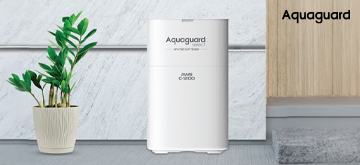
For households with higher water requirements or hard water, the Aquaguard Select AWS C-2500 DX Water Softener is designed to work efficiently. It employs ion exchange technology to remove water hardness up to 1,850 ppm, regenerates automatically once set, and allows users to adjust water softness through its IntelliMix feature.
For bathroom-oriented applications, the Aquaguard AWS C-500 Water Softener is engineered to reduce common hard water problems, including dry skin, hair issues, and scale buildup on fittings. It supports water hardness up to 600 ppm, works with advanced ionic transfer technology, and provides soft water with minimal human intervention.
Final Checklist Before Selecting a Water Softener Capacity
Before buying, make sure you check the following (to avoid costly errors):
- Number of people in the family
- Level of water hardness (tested, not estimated)
- Average daily water usage
- Installation location (whether it is an apartment or a separate home)
- Maintenance expectations and salt availability
Conclusion
Choosing the right capacity of a water softener is less about size and more about understanding your home’s water requirements. Household size, water consumption, water hardness, and regeneration cycles are all important considerations in ensuring a steady supply of soft water.
While many buyers tend to compare options mainly based on water softener price, capacity is an important factor that should not be ignored. A properly sized water softener system is more efficient, cost-effective, and provides long-term protection for your plumbing and appliances.
References:
- https://cgwa-noc.gov.in/landingpage/Guidlines/NBC2016WatRequirement.pdf
- https://www.energy.gov/energysaver/purchasing-and-maintaining-water-softener#:~:text=Water%20hardness%20or%20softness%20is,is%20considered%20moderate%20and%20ideal
- https://www.softprowatersystems.com/pages/how-to-determine-right-size-water-softener-capacity
