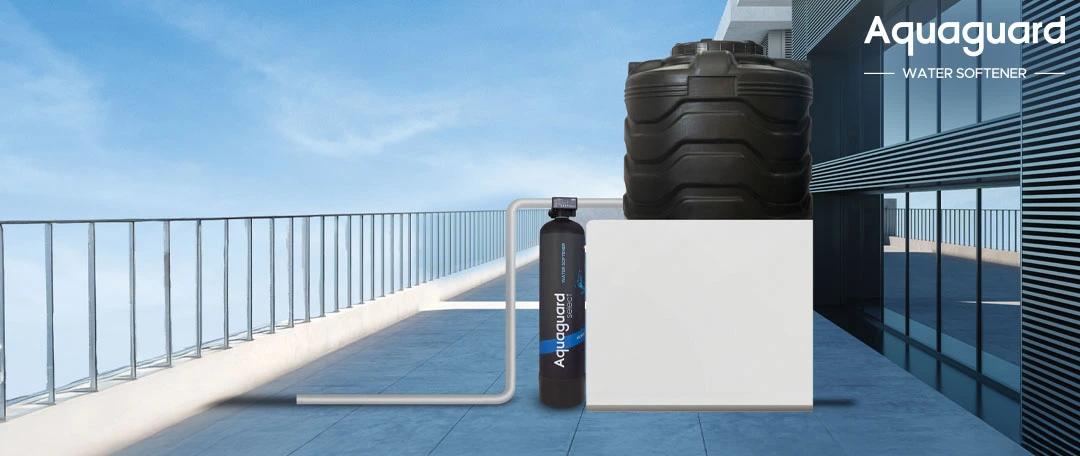
What Features to Look for in a Water Softener for Your Overhead Tank
PUBLISHED ON: 08-Nov-2026
Every fixture in your house, be it bathroom showers, geysers, kitchen taps, or washing machines, draws water directly from your overhead tank. Since this water is raw, it contains high concentrations of mineral salts. This is nothing but hard water. It leads to white scaling across your plumbing and reduces appliance life. Not only this, but it also damages the quality of your skin and hair, leading to problems like hairfall and skin rashes.
Getting a water softener for your home fixes hard water right before it circulates through your home. Check this article to learn how a water softener can make your life much easier.
Why Do You Need A Water Softener?
Hard water contains high levels of dissolved minerals, primarily calcium and magnesium. When hard water flows through pipes or gets heated inside appliances, these dissolved minerals precipitate out of solution, forming a chalky white mineral deposit known as limescale. Over time, limescale accumulation causes several problems for a household:
- Appliance Strain: Limescale coats the heating elements of electric geysers and solar water heaters, forcing them to work harder and consume more electricity.
- Plumbing Blockages: Scale builds up inside pipes, shower roses, and tap aerators, gradually reducing water pressure throughout the house.
- Stains and Surface Damage: White mineral spots leave persistent stains on glass shower partitions, chrome bathroom fittings, ceramic tiles, and kitchen utensils.
- Fabric Wear: Washing clothes in hard water leaves fabrics feeling stiff, causes colors to fade faster, and requires higher amounts of detergent.
- Hair and Skin Issues: Using hard water on a daily basis can harm your skin and hair quality. It can lead to hair fall, frizzy hair, skin rashes, bumps, or acne problems.
All this brings in the need to get home a water softener. It will help minimise all this damage done by hard water.
Capacity - Matching Softener Size to Tank Volume
Selecting the right water softener for your home requires matching the unit's capacity to two critical factors- total stored volume and daily household water turnover. Installing an undersized softener in a high-demand home might not work. So when evaluating capacity, consider both tank size and daily usage:
- Compact Tanks (500L to 750L): Suitable for smaller households with 1 to 3 family members, 1 or 2 bathrooms, and moderate daily laundry needs. A smaller capacity easily handles this stored volume and turnover rate.
- Mid-Size Tanks (1000L to 1500L): Ideal for medium-sized families with 4 to 6 members having regular laundry loads and daily geyser usage. This is the most basic requirement for a water softener for home setups.
- Large Tanks (2000L to 2500L): Designed for larger families, independent bungalows, or multi-story villas with high usage across multiple bathrooms and kitchens. These setups need high-capacity water softeners that handle rapid water replenishment.
Installation and Tank Compatibility
Proper physical installation determines how effectively a water softener performs over its lifespan. Whether installing a drop-in tank unit or an inline pipe softener, verify these practical setup requirements:
- Tank Access and Depth: Ensure your overhead storage tank has a secure, accessible lid that allows proper placement and routine inspection. The softening media or insert must remain completely submerged during normal water level fluctuations.
- Plumbing Modifications: Inline softeners require cutting into the main inlet or outlet pipe on the terrace, which may require professional plumbing assistance. In contrast, drop-in tank inserts sit directly inside the storage tank without requiring major pipe cutting.
- Separation of Scale Control and Drinking Water: A whole-house water softener is designed to prevent scale buildup across pipes, geysers, and appliances. However, softening or conditioning water does not purify it for direct consumption. For safe drinking water, your kitchen should still utilize a dedicated multi-stage RO water purifier, such as an Aquaguard RO system, to eliminate dissolved heavy metals, microplastics, and biological contaminants.
Find the Best Water Softener for your home at Eureka Forbes
Eureka Forbes offers advanced, hassle-free water softeners designed to condition hard water right at the inlet, protecting your household and reducing daily maintenance. You can reap the following benefits of Water Softeners when you buy from Eureka Forbes:
- Automated & Up-Flow Regeneration: Smart automated cycles restore the softening resin with minimal manual intervention, while up-flow regeneration optimizes salt and water consumption for cost-effective operation.
- IntelliMix Technology: Easily blend input water with softened water to customize your preferred softness level while reducing overall salt usage in regions with lower hardness.
- Food-Grade Softening Media: Advanced ionic transfer technology utilizes lab-certified resin to remove hardness-causing calcium and magnesium ions, delivering long-lasting performance and consistent output.
- Smart Salt Reminders: This feature timely alerts notify you when salt levels run low, ensuring uninterrupted performance. Auto setting locks preserve your custom configurations during power outages, while built-in Holiday Mode automatically switches the system to standby when you are away.
- Versatile & Compact Designs: Engineered with durable FRP vessels and space-saving profiles, available in both sleek floor-standing and compact wall-mounted options to suit any home layout.
- Complete Household Protection: Converts harsh hard water into gentle conditioned water, protecting geysers, washing machines, and dishwashers from internal scaling while helping retain soft skin and vibrant hair.
You can check the entire range of our water softeners and find the one that fits your needs well.
Conclusion
Choosing the right water softener for your overhead tank comes down to understanding your tank volume, daily water consumption, and primary water source. You protect your entire home's plumbing network, lower electricity bills on heating appliances, and prevent stubborn scale buildup across all your household fittings.
FAQs
How do I know if I need a water softener for my overhead tank?
You need a water softener if you observe chalky white scale deposits on taps, showerheads, or glass partitions, reduced water flow in pipes, or frequent geyser heating element failure.
How often does a water softener need to regenerate?
Regeneration frequency depends on your system type and water hardness. Salt-based systems typically regenerate every few days to once a week automatically, while salt-free conditioners operate continuously without requiring chemical regeneration.
Is a water softener necessary for borewell water?
Yes. Borewell water generally contains high concentrations of dissolved calcium and magnesium. Installing a water softener prevents severe mineral scale accumulation in household plumbing and appliances.
Can a water softener be installed on an existing overhead tank without major plumbing changes?
Yes. Drop-in salt-free scale conditioners can be placed directly into an existing overhead tank without cutting pipes or altering major plumbing lines.
