Vacuum Attachments and Accessories: What's the Difference
PUBLISHED ON: 17-Sept-2026
Key Takeaways
- Attachments decide what surface you're cleaning; accessories decide whether the vacuum cleaner keeps working properly.
- Floor heads, crevice tools, and upholstery brushes each target a different surface or gap.
- A turbo brush pulls out embedded pet hair that a regular brush roll leaves behind.
- HEPA filters catch fine dust and allergens, not just what's visible to the eye.
- Which combination you need comes down to your flooring, your pets, and whether anyone in the house has allergies.
Ask most people what makes a vacuum good, and they'll mention suction power or motor strength. But a lot of a vacuum's actual usefulness comes down to what's attached to it. Nearly every vacuum in the market comes with a set of attachments and accessories, yet most people never pay attention to what each piece is actually for. Some use the same brush between floor types. Others get into corners a standard head can't reach.
Once you know what's what, you stop reaching for the same tool for every surface in the house.
What is the Difference Between Attachments and Accessories
Vacuum cleaner attachments are what you connect to the hose or vacuum stick to adapt the vacuum for a specific job, such as floor heads, crevice tools, and brushes. Vacuum cleaner accessories, on the other hand, are the parts that keep the vacuum's core function running, such as filters, dust bags, and charging docks.
So attachments decide where and how you clean, while accessories decide how well the machine performs over time. However, a clogged filter or a full dust bin will reduce suction no matter which attachment you're using. Hence, both categories need attention if you want consistent results.
The Main Floor and Carpet Heads
Nearly every vacuum comes with two floor head variants at minimum, one built for hard floors, one for carpet. The hard floor version usually has softer bristles or a smoother base, enough to lift fine dust without scratching tile, marble or wooden floors.
The carpet head works differently. It typically carries a motorised or mechanical brush roll that agitates the fibres to pull out dirt sitting deep in the pile. Some vacuums solve this with a combination head you can toggle between settings, which suits homes with mixed flooring well.
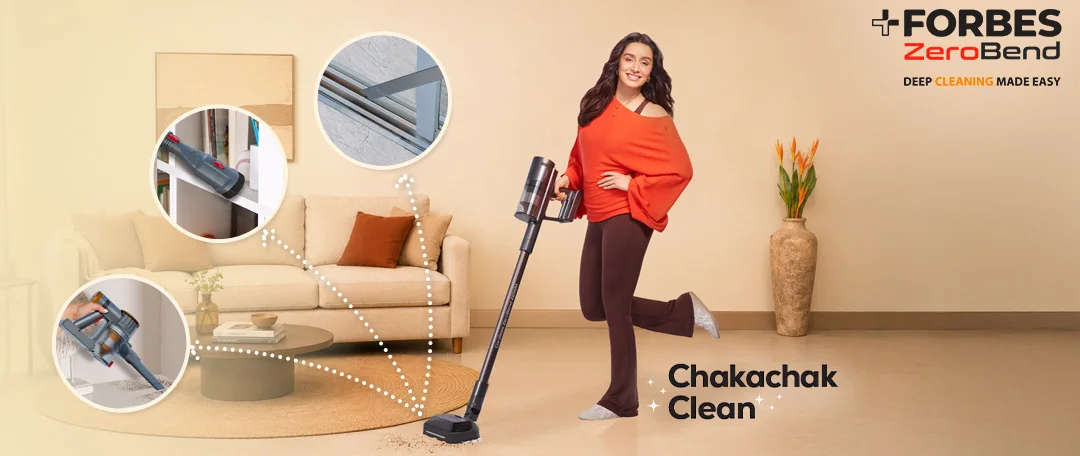
For example, the Eureka Forbes Cordless Zerobend Z15 Vacuum Cleaner comes with multiple attachments that allow you to switch between hard floors, carpets, upholstery, and tight corners, making it a practical choice for homes with different floor types.
Running a hard-floor setting over thick carpet will reduce suction and leave debris behind. Matching the floor brush to the surface is the easiest way to get a full clean in one pass instead of two.
Crevice Tool and Upholstery Brush
The crevice tool is built narrow and angled for a reason: It needs to reach where a regular head simply can't. Skirting boards, radiator gaps, and car seat crevices need a slim tool that concentrates suction into a small area.
The upholstery brush does the opposite job. It's wide, flat, usually edged with soft bristles, and made for sofas, curtains, mattresses, and other fabric. Because it's gentle, it lifts surface dust and pet hair without wearing down delicate upholstery.
Dusting Brush and Mini Turbo Brush
Soft, dense bristles are what set the dusting brush apart. It's made for surfaces that a firmer tool would scratch, such as blinds, lampshades, bookshelves, and electronics.
The mini turbo brush is smaller, motorised, and generally aimed at upholstery and stairs. Its real strength shows up with pet hair as it actually pulls it out.
One protects delicate surfaces, the other digs in for a deep clean, but both handle jobs a standard floor head was never built for.
HEPA Filters and Filtration Accessories
To maintain consistent performance, it's equally important to use compatible Eureka Forbes vacuum cleaner accessories, such as genuine HEPA filters, dust bags, and replacement attachments designed for your specific model. Using the right accessories helps preserve suction performance, filtration efficiency, and the overall lifespan of the vacuum cleaner.
A HEPA filter traps very fine particles, dust, pollen, and pet dander before the exhaust air leaves the machine, which matters a lot more in homes with allergy sufferers or pets. Ahead of the HEPA filter, you'll usually find foam or mesh pre-filters catching the larger debris first, which extends how long the main filter lasts.
If you overlook maintenance, none of this would work. A clogged filter drags down suction and filtration quality both, regardless of how well every attachment on the vacuum is performing. It's the least visible part of the whole system, but it affects both how clean your home gets and the air you're breathing while you do it.
How to Pick the Correct Combination for Your Home
Which combination works best for you really comes down to your flooring, your furniture, and who (or what) lives in your house.
For Homes With Mixed Hard Floors and Carpets
A 3-in-1 combination tool is the obvious fit here since it handles both surfaces without needing two separate attachments. Add a crevice tool for the edges, skirting boards, and gaps neither tool can reach.
For Pet Owners
The mini turbo brush and a HEPA filter should be non-negotiable. The turbo brush lifts embedded fur off upholstery and carpet in a way a standard brush roll won't, and the HEPA filter catches the dander and fine debris that regular filtration tends to miss.
For Homes With Delicate Furniture or Electronics
Here, the dusting brush and upholstery attachment do more work. Their softer bristles get the job done on blinds, lampshades, and fabric without scratching or fraying anything.
Conclusion
Attachments and accessories aren't doing the same job, and once you know which is which, it changes how you use the vacuum. Attachments adapt the machine to different surfaces and problem spots. Accessories keep the suction and filtration behind all of it working the way they should. Build the right combination for your own home, rather than defaulting to whatever head came pre-attached, and an ordinary vacuum starts pulling a lot more weight.
Frequently Asked Questions (FAQs)
Do all vacuums come with these attachments, or are they sold separately?
Basic attachments like a crevice tool and upholstery brush usually come with the vacuum. Specialised ones, such as turbo brushes or HEPA filters, are often sold separately depending on the model.
Can the wrong attachment damage my floor or furniture?
Yes, it can. A carpet-designed brush roll used on delicate hard floors or upholstery can scratch or wear down the surface, so matching the tool to the material matters more than people think.
Is a HEPA filter attachment necessary if I don't have allergies?
Not strictly necessary. But HEPA filters trap fine dust and pet dander, which improves air quality even in households without diagnosed allergies.
