Salt vs Salt-free Water Softener: Which is Better
PUBLISHED ON: 18-Sept-2026
Key Takeaways
- Softeners using salt physically remove calcium and magnesium through ion exchange, producing genuinely soft water.
- Salt-free systems do not actually remove the minerals but condition them, so the water remains hard even after treatment.
- The difference is most noticeable for skin, hair and the lifespan of appliances.
- Salt-based systems need periodic salt refills, but modern models are built to minimise salt and water consumption.
- For most Indian households dealing with hard water, salt-based softeners deliver more reliable, everyday results.
Hard water is a common problem faced by many Indian households, which is indicated by dry skin, hair fall, soap scum and scale accumulation on taps and appliances. There are two main technologies that claim to address this: salt-based softeners and salt-free systems. Only one of them actually gets rid of the minerals causing the problem.
Water softeners that use salt work by ion exchange, which totally removes calcium and magnesium from the water. They are the most effective and reliable way to treat hard water on a daily basis in areas where the water is always very hard.
What a Salt-Based Water Softener Does
Salt-based softeners follow a process called ion exchange. Hard water is passed through a resin bed that is loaded with sodium ions. As the water flows through the resin, calcium and magnesium ions stick to the resin, and sodium ions are released into the water to replace them. What comes out is softened water.
Over time, as the resin becomes saturated with minerals, the system switches to the brine tank. A regeneration cycle flushes the resin with a concentrated salt solution, replacing the built-up calcium and magnesium with fresh sodium ions so the softening process can continue. Most modern units automate this cycle entirely, needing only periodic salt refills.
Because the process physically removes hardness, the result is water that actually feels soft, lathers easily, and leaves no mineral residue on skin, hair, or surfaces.
What a Salt-Free System Does
Salt-free systems, often called water conditioners, work differently. Instead of removing calcium and magnesium, they change the way these minerals behave so they are less likely to stick to pipes, taps, and appliances as limescale. The water that comes out still contains the same hardness minerals; they've simply been altered so they don't bond as easily.
This creates a few practical drawbacks such as:
- The water doesn't develop the smooth, soft feel that comes with actual softening, since the minerals remain present.
- Soap and shampoo still lather less effectively than they would with genuinely softened water.
- Issues like dry skin or hair fall linked to hard water often persist.
- Salt-free systems also tend to be less effective in regions with very high water hardness, since conditioning has limits that ion exchange doesn't.
The Core Difference: Softening vs. Conditioning
The distinction comes down to removal versus alteration. Softening takes hardness minerals out of the water. Conditioning leaves them in, just in a different form.
| Aspect | Salt-Based Softener | Salt-Free System |
| Process | Ion exchange (removes minerals) | Crystallisation (alters minerals) |
| Hardness minerals in output water | Removed | Still present |
| Feel of water | Genuinely soft, better lather | Minimal change in feel |
| Effectiveness in very hard water | High | Limited |
| Maintenance | Requires salt refills | Requires cartridge replacement |
| Effect on skin and hair | Reduces dryness and hair fall linked to hard water | Limited improvement |
Why Salt-Based Wins for Everyday Use
For most households, the everyday experience of hard water, such as dry skin after a shower, hair that feels rough, and stained bathroom fittings, comes down to the actual presence of calcium and magnesium in the water.
Salt-based softeners address this directly by removing the minerals, which is why the improvement in water feel and appliance performance is immediately noticeable.
Here are a few reasons why salt-based water softeners win every day.
Removes the Problem at Its Source
Salt-based softeners address this directly by removing the minerals. Because the hardness is genuinely gone, the improvement in how water feels and how appliances perform is noticeable almost immediately.
Easier to Maintain Than Most People Expect
Modern salt-based systems come with smart salt-level reminders that alert you when a refill is due, along with automated regeneration cycles that refresh the resin without any manual effort. This has made day-to-day maintenance far simpler than older manual systems required.
Best Suited for Genuinely Hard Water
If your home consistently deals with hard water, especially in areas with high mineral content, a salt-based hard water softener is still your best bet for reliably soft water day to day.
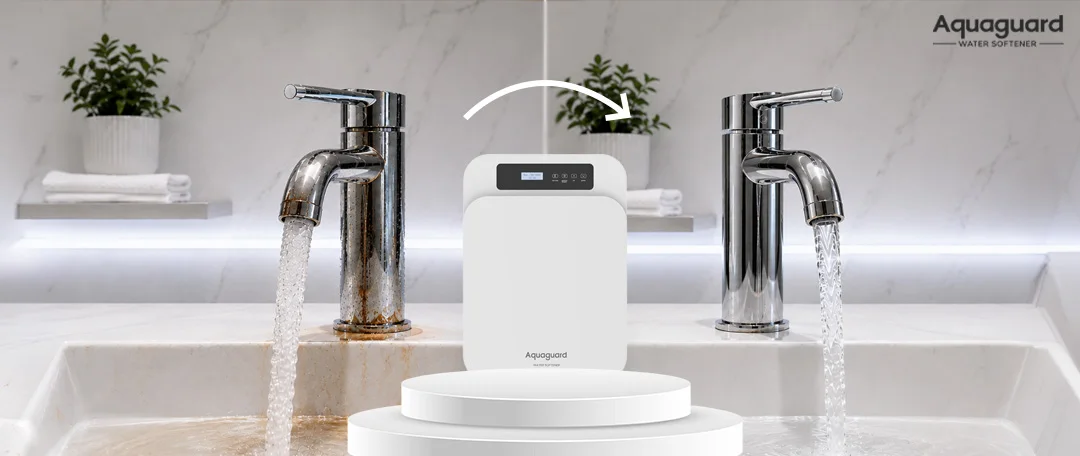
When you're shopping for a water softener for home use, look for one built on proven ion-exchange technology, with automatic regeneration and low maintenance needs. The Aquaguard Select AWS I-2500 Water Softener, for instance, is designed to convert hard water into soft water while protecting your bathroom fittings, plumbing, and appliances from scale buildup.
Conclusion
Salt-free systems can help cut down on scale buildup, but they don't actually remove the hardness minerals from your water; they just change how those minerals behave. Whether you're looking for a bathroom water softener or a whole-house solution, salt-based softeners remain the more dependable choice for consistently soft water. For households prioritising consistent results over minimal maintenance, salt-based remains the stronger choice.
Frequently Asked Questions (FAQs)
Does a salt-free softener remove calcium and magnesium?
No. Salt-free systems alter the mineral structure to reduce scale formation, but the calcium and magnesium remain in the water rather than being removed.
Which is better for hair fall caused by hard water?
Salt-based hard water to soft water convertors are generally more effective, since they remove the hardness minerals entirely rather than just altering them, which has a more noticeable impact on hair and skin.
How often does a salt-based softener need salt refills?
This depends on water usage, hardness levels, and tank size, but most households refill monthly. Fully automatic models with smart salt reminders make it easier to track when a refill is due.
