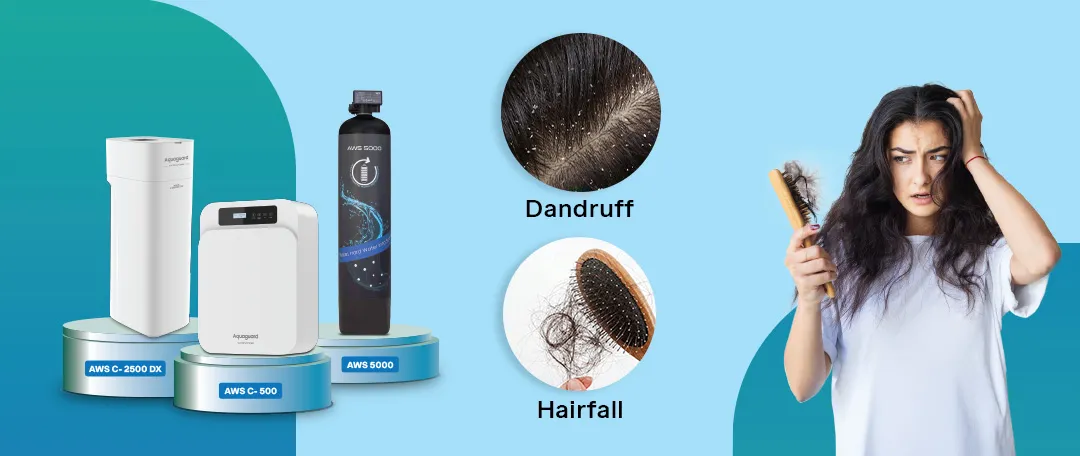
Could Hard Water Be Causing Your Dandruff?
PUBLISHED ON: 05-Aug-2026
Key Takeaways:
- Persistent dandruff can sometimes be linked to hard water instead of hair care products.
- Mineral deposits from hard water can cause a dry scalp and aggravate the dandruff.
- Choosing the right water softener can help minimise mineral buildup and support a healthier scalp.
For treating dandruff, you may have tried most of the anti-dandruff shampoos available in the market and switched conditioners. You may have even tried different scalp oils, giving each of them enough time. The flaking eases for a bit, but it returns. Hard water could be a reason behind this persistent flakiness. However, in many Indian households, hard water is a common and often overlooked issue.
Many people do not realise the effects hard water can have on their hair and scalp. Awareness of dandruff’s correlation with water quality can help you treat the cause rather than just mask the symptoms.
What Is Hard Water and Why Is It a Problem for Your Scalp?
Hard water contains dissolved minerals, mainly calcium and magnesium, that are picked up as water passes through rock and soil. These minerals often leave residue on the scalp that regular shampooing may fail to remove. Over time, that residue builds up, blocks follicles, disrupts the scalp’s natural moisture, and creates conditions in which flaking and irritation take hold.
The Hard Water and Dandruff Connection: What is Actually Happening
When the scalp is washed with hard water, the residue remains rather than rinsing away completely. This accumulation increases over time and can lead to:
- Drying of the scalp because minerals interfere with natural oil production.
- Partial follicle blockage, leading to itching and slow growth of healthy hair.
- The scalp’s pH balance shifts, creating a conducive environment for fungal growth.
- Hair becomes rough, looks dull, and breaks more easily, even with regular conditioning.
It is worth noting that dandruff is not caused solely by an oily scalp or fungal infection. Mineral-induced irritation can mimic dandruff and aggravate pre-existing scalp conditions.
How to Tell If Hard Water Is the Real Culprit
There are some indications that specifically suggest that hard water can be the real culprit behind your dandruff. These signs are:
- Visible white or chalky build-up on your taps and shower heads.
- Soap and shampoo that struggle to produce lather and leave you with sticky residue.
- Dry hair that is difficult to comb or manage after washing, even after using a conditioner.
- Scalp symptoms that clear up when you wash your hair with filtered water.
- Recurring dandruff even with regular use of medicated shampoo.
Hard water can be identified using a water-testing kit, which measures the concentration of hardness-causing minerals. Numerous regions across India, particularly in northern and western regions, have reported high levels of water hardness.
Shampoos and Treatments Are Treating the Symptom, Not the Source
Medicated shampoos primarily address symptoms at the scalp’s surface by helping reduce fungal activity, inflammation, and minimising flaking. But treating the scalp while the water stays hard is like mopping the floor with a leaking pipe overhead.
Every time you wash your hair with hard water, new minerals accumulate. The shampoo reduces the symptoms, but hard water reintroduces them. It is a cycle that continues regardless of how consistently you follow your haircare routine.
Shampoos, apple cider vinegar, and chelating treatments may provide temporary relief from dandruff buildup. But none of them addresses the root problems. They just add more steps to your routine without actually addressing the problem.
How a Water Softener Actually Fixes the Problem
A water softener system works through a process called ion exchange. Calcium and magnesium ions in the water are replaced with sodium ions as the water passes through resin beads inside the unit. The result is softened water that rinses effortlessly, lathers easily, and reduces mineral residue on skin or hair.
A hard-water softener installed at the bathroom inlet can ensure a consistent supply of softened water. This can bring the scalp pH to a healthier range by reducing the mineral buildup on the scalp.
Choosing the Right Water Softener for Your Home
When comparing different water softener systems, it is important to look beyond water softener price. There are certain factors as well to keep in mind while buying a water softener:
- Test your water hardness: Testing your water may give insight into the hardness of your water supply.
- Consider daily water usage: The daily water usage directly influences the water softener capacity.
- Regeneration features: Some water softeners have automatic regeneration that remembers your water usage patterns and adjusts their operation accordingly. There are other water softeners that require manual regeneration, providing hands-on control to the user.
- Check installation space: Modern water softeners have compact and space-saving designs to ensure an uninterrupted supply of softened water even with less space.
- Build quality: Go for systems with corrosion-resistant tanks that can help improve the reliability and lifespan of the system.
Eureka Forbes provides a comprehensive range of water softeners which can be the right fit for your home.
1. Aquaguard AWS I-600 Water Softener is a manual water softener for bathrooms.
- Comes with a wall-mounted compact body, making it easier to install in bathrooms.
- Contains 3X salt storage with max grid technology.
- Easy to operate with a 5-stage valve, allowing users to perform tasks like softening, regeneration and cleaning with a simple twist of a knob.
- Comes with backwash mode, which cleans the resin of any debris, thus increasing the lifespan of the unit.
2. Aquaguard Select AWS I-2500 Water Softener is an automatic water softener for homes.
- The water softening media will automatically regenerate itself.
- Consume 30-40% less salt than other brands.
- Energy-efficient, consumes electricity equivalent to charging a mobile phone.
- Comes with an auto-lock setting, in which, if there is a power outage, the internal memory will maintain its previous setting.
Conclusion
Dandruff that keeps coming back despite regular treatment is worth looking at differently. If your water leaves white marks on taps, reduces shampoo lather, or makes hair feel dry immediately after washing, hard water is likely contributing to it.
A hard-water-to-soft-water converter is not a substitute for proper hair care. It eliminates mineral interference that makes hair care ineffective. When the water is softened, your products work well. Over time, you may notice reduced scalp irritation and flaking, breaking the cycle of short-term solutions.
Frequently Asked Questions (FAQs)
Can hard water directly cause dandruff, or does it only make it worse?
Hard water does not directly cause dandruff, unlike a fungal infection. However, hard water creates an environment on your scalp where dandruff is more likely to occur and persist longer.
How do I know if I have hard water at home?
If you notice signs such as limescale buildup around taps and showerheads, dry skin, and frizzy hair, there is a chance your water supply may contain hardness-causing minerals.
Will a water softener affect the quality of drinking water?
Yes, a home water softener affects the quality of drinking water by adding minute amounts of sodium into the softened water.
How long does it take to see improvement in hair and scalp health after installing a water softener?
Most people notice a difference within two to four weeks. A visible reduction in flaking typically occurs within 4 to 8 weeks, depending on the extent of mineral buildup.
