Choosing the Right Water Cooler Capacity for Safe, Reliable Daily Use
PUBLISHED ON: 28-Jan-2026
Choosing the right water cooler size is not just about picking a machine that looks right or fits your budget. It is about understanding how much drinking water your space actually needs throughout the day. A cooler that is too small will struggle during peak usage, while one that is too large can lead to unnecessary costs and energy consumption.
The goal is to match capacity with real usage needs. This LPH water cooler guide will help you choose the right device by understanding the right requirements that should be matched.
How to Choose the Right Water Cooler Size
To choose the right water cooler, you must get answers to simple questions and understand step by step how the requirements should be handled.
Step 1: Understand What Water Cooler Capacity Means
Water cooler capacity is measured in LPH (litres per hour). This figure indicates how much chilled or purified water the cooler can dispense in one hour of continuous use.
For example, a 100 LPH water cooler can supply up to 100 litres of drinking water in an hour. This does not mean the storage tank holds 100 litres. Instead, it reflects how efficiently the machine can cool or purify water and make it available for consumption over time.
LPH determines output speed, while storage determines availability during peak use. Understanding LPH is the first and most important step when choosing a drinking water cooler for commercial use.
Step 2: Estimate the Number of Daily Users
The number of people using the water cooler has a direct impact on the storage size you need. Offices, schools, hospitals, and factories all have very different usage patterns.
As a general reference, one person typically consumes 2–3 litres of drinking water per day. If 40 people are likely to use the cooler around the same time or during lunch hours, the machine must be able to handle that demand without long waiting times or empty tanks.
However, daily consumption alone is not enough; what matters more is when people use the water.
Step 3: Consider Peak Usage, Not Just Total Consumption
Many buyers make the mistake of calculating total daily water consumption only. What matters more is peak hour demand.
For example, an office with 50 employees may consume water evenly throughout the day, while a factory floor may have all workers using the cooler within a 30–45 minute break window. In such cases, a higher LPH rating ensures the cooler can refill and chill water fast enough during these busy periods.
Choosing capacity based on peak usage prevents queues, delays, and user frustration.
Step 4: Understand the Type of Space
Different commercial environments require different water cooler sizes:
- Small offices or clinics usually do well with lower LPH models
- Medium offices, schools, or retail spaces need mid-range capacity
- Factories, hospitals, and public buildings require high-capacity coolers designed for continuous use
The size of the space and how people move within it also affect how often the cooler is accessed.
Step 5: Decide Between Storage and Continuous Cooling
Some water coolers rely on large storage tanks, while others focus on fast cooling and purification. Storage-based models are useful where usage is frequent and unpredictable. Continuous-cooling models work well where water demand is steady and spread out.
Balancing storage capacity with LPH ensures uninterrupted access to safe drinking water.
Step 6: Think Long-Term, Not Just for Immediate Needs
It is always wise to plan for growth. An office may add more employees, or a school may increase student admissions. Selecting a water cooler with slightly higher capacity than current needs help avoid replacement costs later.
Maintenance support, energy efficiency, and service availability should also be considered alongside capacity.
Water Cooler Capacity Comparison
To help you compare capacities and choose the right option based on usage needs, the table below outlines key specifications, ideal applications, and performance highlights.
Model | Storage Capacity | Purification Technology | Dispensing Temperature | Ideal For | Cooling Output | Why Choose This Variant? | Key Features / USP |
40 L | RO + UV | Ambient & Cold | 20–40 people | Moderate cooling | Compact, energy-efficient, perfect for steady drinking water needs | 7-stage purification, Active Copper-Zinc booster, safety shut-off | |
40 L | UV + Copper-Zinc | Ambient & Cold | 20–40 people | Moderate cooling | Compact + mineral-enriched water with low maintenance | Nanopore long-life filters, UV purification, copper-zinc enrichment (based on product page) | |
80 L | UV + Copper-Zinc | Ambient & Cold | 50–80 people | Fast cooling | Balanced cooling + purification for mid-size demand | Nanopore filters, sturdy steel body, multi-stage UV purification | |
80 L | RO + UV + Copper-Zinc | Ambient & Cold | 50–80 people | Fast cooling | Balanced + strong purification, mineral-enriched water | 7-stage purification, safety monitoring, stainless steel body | |
120 L | RO + UV + Copper-Zinc | Ambient & Cold | 100–150 people | High cooling | Ideal for peak-time drinking water consumption | 7-stage purification, large storage, mineral booster, safety shut-off | |
120 L | UV + Copper-Zinc | Ambient & Cold | 100–150 people | High cooling | Balanced purification + mineral enrichment, good for high-volume but lower TDS | Nanopore long-life filters, UV purification, copper-zinc boost | |
120 L | UV + Copper-Zinc; ACH dispensing (Hot / Cold / Ambient) | Ambient, Cold, Hot | 200+ people (or large multi-use commercial spaces) | Very high cooling (because of ability to supply three temps) | Heavy-duty cooling + purification for high footfall areas | Hot + Cold + Ambient dispensing, UV purification, copper-zinc infusion, large tank | |
Aquaguard Hot & Cold RO+UV (Floor-standing) | ~16.5 L storage in compartments (Ambient / Hot / Cold) | RO + UV | Ambient, Hot & Cold | 50–80 people (or varied usage) | Fast / Moderate / High (depending on use) | Multi-temp dispensing + strong purification in one unit | Three-temp dispensing, RO + UV filtration, leak detection, antimicrobial BioCote surface |
When Is a High-Capacity Water Cooler Necessary?
A high-capacity water cooler is necessary when:
- A large number of people need water at once
- Usage is dispersed over long hours
- There are set break periods
- There is a lot of daily foot traffic
Such groups frequently include institutions, factories, big offices, and hostels. In such places, higher capacity prevents waiting and ensures smooth operations. In these settings, underestimating capacity often leads to downtime, complaints, and hygiene concerns.
Final Thoughts
Choosing the right water cooler is about selecting a capacity that fits your daily demand. A smaller setup may do well with a lower-capacity water cooler, while larger spaces benefit from a high-capacity water cooler that can handle peak usage without stress.
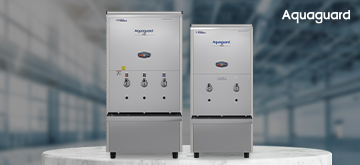
Understanding water cooler capacity helps you make a smarter choice. With thoughtfully designed solutions like the Aquaguard water coolers range, organisations can provide safe, chilled drinking water without compromise.
Frequently Asked Questions (FAQs)
Is a 100 LPH water cooler enough for offices or schools?
A 100 LPH water cooler is suitable for offices or staff rooms with 50-100 people. Schools and larger offices usually need higher capacity.
Why choose a drinking water cooler for commercial use with purification?
A drinking water cooler for commercial use with in-built purification ensures safe water, saves space, and reduces maintenance effort.
