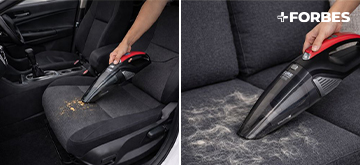
Pet Hair, Sand & Food Crumbs: The Toughest Car Cleaning Problems and How to Solve Them
PUBLISHED ON: 14-Feb-2026
Key Takeaways
- Car interiors trap pet hair, sand, and food crumbs deep within tight gaps, upholstery, and floor mats, making manual cleaning ineffective.
- Each type of dirt behaves differently, which is why targeted vacuum cleaning tools and attachments are essential.
- Regular home vacuum cleaners lack the reach, precision, and flexibility needed for thorough car interior cleaning.
- A dedicated car vacuum cleaner or a convertible handheld model helps remove embedded dirt quickly and efficiently.
- Choosing the right car vacuum based on usage habits ensures easier maintenance, better hygiene, and long-term interior care.
Keeping a car clean can feel more difficult than cleaning a room at home. Car interiors are compact, filled with tight corners and curves, and made of materials such as upholstery, textured carpets, rubber mats, and moulded plastic panels that tend to trap dust and debris easily.
Why Car Interiors Are Harder to Clean
In cars, narrow seat gaps, layered upholstery, footwell rails, and limited-reach areas create multiple places where dirt can settle and stay hidden. Movement while driving pushes debris deeper into seams and corners, making surface cleaning ineffective. This is why regular home cleaning methods often fall short and why a purpose-built and feature-rich vacuum cleaner for car cleaning becomes necessary.
The Most Common Car Interior Cleaning Challenges
Not all messes in the car interiors are to be dealt with in the same way. Some cling to surfaces, some spread silently, and others remain hidden until they start causing odours or discomfort.
Car interiors collect different kinds of dirt, each requiring a slightly different cleaning approach, even with a vacuum cleaner.
- Pet Hair: Sticky and Deeply Embedded
Pet hair can be one of the most frustrating car cleaning challenges. It clings to fabric seats, wraps around fibres, and settles into seams where hands cannot reach. Even after brushing, hair often remains trapped.
What works best
A car vacuum cleaner with:
- Strong and consistent suction
- Targeted vacuum attachments for upholstery and seams
- Compact tools and accessories that can reach seat edges and corners
A focused car vacuum designed for precision makes it easier to lift hair without damaging interior surfaces.
- Sand: Fine Particles That Travel Everywhere Around the Car
Sand may look harmless, but it spreads quickly and settles deep into mats, rails, and footwells. Shaking floor mats often makes the situation worse, pushing sand further into the car and in the atmosphere.
What works best
A car vacuum cleaner with:
- High airflow vacuum blower to lift fine particles
- Narrow nozzles accessories for edges and footwells
- Easy access to low and tight areas with a cordless vacuum cleaner
For people who frequently use the car, regular vacuuming helps prevent sand from building up over time.
- Food Crumbs: Small Messes That Create Bigger Problems
Eating on the go leads to crumbs falling between seats, under cushions, and along door panels. These hidden particles not only look untidy at once but can also cause odours if left unattended.
What works best
A car vacuum cleaner with:
- Precision cleaning tools like nozzles, hose pipe and brushes
- Easy vacuum cleaner handling for quick clean-ups
- Vacuum filters that trap fine dust and debris
A reliable car vacuum cleaner allows users to clean small spills immediately, preventing long-term buildup.
Why Car-Specific or Adaptable Vacuums Work Better
After identifying the most common types of car interior messes, it becomes clear why regular home vacuum cleaners are not always the best solution. They are often difficult to manoeuvre inside compact spaces, and limited when it comes to reaching tight corners and seat gaps. Car-specific vacuum cleaners, as well as adaptable vacuum cleaners designed for flexibility, offer better control and efficiency for interior cleaning.
Choosing the Right Car Vacuum Cleaner
Choosing the best car vacuum cleaner depends on usage patterns, cleaning frequency, and the type of mess typically found inside the vehicle. For quick, regular car maintenance, a handheld vacuum offers convenience and portability. For users who want a single solution for both home and car cleaning, a convertible upright vacuum provides added flexibility and power.
Dedicated Handheld Car Vacuum Cleaners
Handheld car vacuums are designed specifically for vehicle interiors. They are compact, lightweight, and easy to store, making them ideal for frequent use. Their focused accessories help clean tight spaces, dashboards, seat gaps, and boot areas with minimal effort.
The Sure from Forbes Car Vac Handheld Vacuum Cleaner is a practical example of this category. Designed for quick and effective car cleaning, it offers strong suction through a 100-watt motor, helping remove dust, crumbs, and fine debris. Its compact and lightweight build supports easy handling, while the 3-metre power cord allows users to reach across the car without frequent repositioning. Features like a washable HEPA filter support hygienic use, and the built-in LED torch improves visibility in dark spaces such as under seats. With targeted accessories, it is well suited for precise car interior cleaning and light household tasks when needed.
Upright Vacuum Cleaners That Convert to Handheld
Modern upright vacuum cleaners have evolved to offer more flexibility. Many can convert into handheld units, allowing users to clean both home surfaces and car interiors using one appliance. This kind of vacuum cleaner is ideal for users who want stronger suction and multi-surface performance without maintaining separate cleaning tools.
The Forbes Stick Vac NXT Vacuum Cleaner fits well into this category. Its 2-in-1 upright and handheld function allows easy switching between floor cleaning and detailed car cleaning. Powered by a 550W motor, it delivers strong and consistent suction that helps lift dust, pet hair, and debris from seats, carpets, and upholstery. The long 16-metre power cord provides wide coverage, while multiple accessories support varied cleaning needs across the home and inside the car.
Conclusion
Car interiors collect dirt in ways that are easy to overlook but difficult to remove once it settles in. Addressing these messes early and using the right tools helps maintain hygiene, comfort, and the overall condition of the vehicle. By choosing a car vacuum cleaner that suits individual cleaning habits, for quick touch-ups or more thorough cleaning, car owners can reduce effort, save time, and keep their interiors consistently clean without turning car maintenance into a task.
Frequently Asked Questions (FAQs)
How often should a car be vacuumed to maintain a clean interior?
For most vehicles, vacuuming once a week helps prevent dirt from settling into upholstery and corners. Cars used by families, pet owners, or frequent travellers may benefit from more frequent cleaning to avoid buildup.
Can car vacuum cleaners damage upholstery or interior surfaces?
When used correctly with appropriate attachments, car vacuum cleaners are safe for upholstery and interior materials. Using soft brushes and avoiding excessive pressure helps protect fabric, leather, and plastic surfaces during cleaning.
Is corded or cordless better for car vacuum cleaning?
Both options work well depending on usage. Corded car vacuum cleaners provide consistent power for longer cleaning sessions, while cordless handheld models offer greater flexibility and ease of movement for quick clean-ups.
