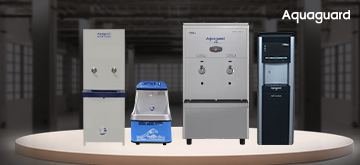
Buying Guide on How to Choose the Right Water Cooler with a Purifier
PUBLISHED ON: 29-Jan-2026
Access to safe drinking water is essential in any workplace. According to news reports, between January 2025 and January 2026, at least 5,500 people across the country fell sick due to water-related issues, emphasising the importance of reliable water quality beyond just homes.
In offices, employees and visitors depend on safe drinking water throughout the day. A consistent supply supports comfort, focus, and everyday productivity. Providing drinking water in an office is not only about having a water cooler in place. Factors such as purification, capacity, and temperature also matter, as they directly affect ease of use and reliability during working hours.
This buying guide explains the key aspects to consider when selecting a water cooler with a purifier for your office, helping you find a solution that delivers safe, comfortable, and dependable drinking water every day.
Step 1: Learn What a Water Cooler with an Inbuilt Purifier Means
A water cooler with an inbuilt purifier is a single unit that both purifies and cools drinking water. Instead of using separate systems for purification and cooling, this combined unit performs both functions in one setup. Water is purified first to remove impurities and make it safe for consumption, and is then cooled and stored for use throughout the day. Such systems help save space, simplify maintenance, and provide drinking water at a consistent quality and temperature.
Here is a simple overview of how the process works:
Water enters the system → Water passes through the inbuilt purification stage → Purification using RO, UV, or RO + UV (depending on the model) → Impurities and contaminants are removed → Purified water is cooled → Clean, chilled water is stored → Safe drinking water is ready for use
Step 2: Choose the Right Purification Technology
Purification is one of the most important aspects of a water cooler (or even the most important aspect). Since water quality varies across sources such as municipal supply, tap water, and borewell water, selecting a system with the right purification technology is essential.
Before choosing a water cooler, it helps to understand the main purification technologies commonly used in commercial systems, namely RO (Reverse Osmosis) and UV (Ultraviolet). Each works differently and is suited to specific water conditions.
RO Technology
RO technology purifies water by passing it through a fine membrane that removes dissolved salts, excess minerals, heavy metals, and chemical and microbial impurities that are not visible to the eye. Due to its thorough filtration, RO-based water coolers are suitable for areas with high TDS levels or where water comes from borewells or mixed sources. They help improve taste and make water safer for regular consumption.
UV Technology
UV technology uses UV light to deactivate bacteria, viruses, and other microorganisms present in water. It does not alter the taste or mineral content of the water. UV water coolers are suitable for offices and facilities that receive treated municipal water, where TDS levels are already low, but protection against microbial contamination is still required.
Active Copper and Zinc Booster
Copper and zinc boosters add trace amounts of these minerals to drinking water. Both are known for their antimicrobial properties and role in boosting immune health. This technology helps enhance water quality without affecting its taste.
RO vs. UV Water Cooler - Understanding the difference
Feature | RO Water Cooler | UV Water Cooler |
Handling Water Quality | High TDS, salts, and chemicals | Treated municipal water |
Purification method | Membrane-based filtration | UV light disinfection |
Removes dissolved impurities | Yes | No |
Removes bacteria & viruses | Yes | Yes |
Improves taste | Yes | Yes |
Best suited for | Borewell or mixed water sources | Municipal/corporation water |
Step 3: Understand Where the Water Cooler Will Be Used
The performance of a water cooler depends largely on where and how it will be used. Before selecting a system, it is important to consider the following factors:
How many people will use it each day?
Estimate the number of daily users to select the right capacity. For example, a 40-litre system is suitable for around 40 people, while an 80-litre system can support up to 100 users.
Does the space operate continuously or during fixed hours?
Match the system to operating hours so it can handle continuous use or operate efficiently during defined working periods.
Will demand increase during breaks, shift changes, or visiting hours?
Plan for peak usage by choosing a system with sufficient storage and fast cooling recovery to prevent waiting time or shortages.
Water coolers for commercial spaces in facilities such as factories, schools, hospitals, and large offices require high-capacity storage designed for continuous use. These systems must deliver purified water without pressure drops, delays, or frequent refilling. Unlike home water purifiers, which are typically designed for limited daily consumption of around 5 to 15 litres, commercial water coolers are built to support simultaneous use by many people, often ranging from 50 to 1,500 users or more.
Step 4: Check Cooling Capacity and Storage
The cooling capacity of a water cooler determines whether it can meet the daily cold water needs of an organisation. In commercial spaces, water demand is not evenly distributed throughout the day. It often increases sharply during lunch breaks, shift changes, class intervals, or visiting hours.
When evaluating how quickly a water cooler can dispense chilled water and how much it can store, pay attention to the following:
Cooling capacity (litres per hour) | Indicates how much chilled water the system can produce continuously. |
Storage capacity | Helps manage short periods of high demand without delays. |
Cooling consistency | Ensures reliable performance during long working hours or repeated use. |
For busy offices, factories, hospitals, and institutions, cooling capacity is not just a comfort feature but a functional requirement. Selecting the right balance of cooling power and storage helps ensure smooth and uninterrupted operation.
Step 5: Pay Attention to Build Quality and Materials
In commercial environments, water coolers are used repeatedly throughout the day. This makes build quality just as important as purification and cooling performance. A system that performs well on day one should continue to do so reliably over months and years of regular use.
One key aspect to check is the material of the storage tank. Stainless steel water cooler tanks are preferred over plastic because they are more durable and hygienic. Aquaguard models, for instance, use pressurised stainless-steel tanks with thicker walls, designed to withstand internal pressure and continuous water storage without compromising water quality.
Why it matters:
- Resists corrosion and rust even with constant water contact
- Maintains hygiene by reducing the risk of bacterial growth and odour
- Preserves water taste with no leaching or aftertaste
Along with the tank, a durable outer body (made from food-grade metal or material) designed to withstand daily wear and frequent use contributes to long-term reliability, especially in busy commercial and industrial settings.
Step 6: Look for Features That Simplify Daily Use
When evaluating commercial water coolers, it helps to focus on features that reduce daily effort rather than add complexity.
Useful commercial water cooler features include:
- Easy-to-clean surfaces that help maintain hygiene in shared spaces
- Low-maintenance filters that do not require frequent checking or replacement
- Safety mechanisms that ensure only purified water is dispensed and automatically stop operation if a purification issue occurs
- High-flow taps that reduce waiting time during busy hours
Step 7: Think Long-Term, Not Just the Initial Cost
When choosing a commercial water cooler, focusing only on the upfront price can be misleading. What matters more is how the system performs over the years of daily use.
Reputed water coolers with inbuilt purifiers are typically built with higher-quality internal components. These may include robust compressors, reliable purification systems, and stainless-steel storage tanks designed for continuous operation. Such components directly influence durability, cooling consistency, and water quality over time.
Lower-cost models may seem economical initially, but they often require more frequent servicing, filter replacements, or part changes. Over time, these hidden costs can add up in the form of higher maintenance expenses, downtime, and disrupted access to drinking water.
The best water cooler with a purifier strikes a balance between:
- Durable construction that withstands constant use
- Reliable purification across varying water conditions
- Stable cooling performance during peak demand
- Lower maintenance requirements and fewer service interruptions
Some Reliable Commercial Water Cooler Options from Forbes
Aquaguard Purechill 40 PSS RO+UV Water Cooler with Inbuilt Purifier and Storage
This water cooler combines RO and UV purification to deliver safe, clean drinking water, even in areas with high TDS or variable water quality. The RO stage removes dissolved salts, heavy metals, and other impurities, while UV disinfection eliminates bacteria and viruses for added protection.
Its PSS (Pressurised Stainless Steel) storage tank ensures hygienic storage, corrosion resistance, and consistent water pressure for smooth dispensing. Designed for durability and reliable performance, this model is well-suited for small offices, clinics, and classrooms where water quality may be a concern but daily usage is moderate.
Aquaguard Purechill 120 PSS UV+CuZn ACH Water Cooler with Inbuilt Purifier and Storage
The Aquaguard Purechill 120 PSS is built to handle higher water demand with ease. Its large PSS storage tank ensures an uninterrupted supply of drinking water, even during peak usage hours.
The UV and CuZn purification system provides consistent microbiological safety while helping maintain water taste and quality. With reliable cooling and robust construction, this model is suitable for factories, hostels, and large offices where both capacity and dependable performance are essential.
Final Thoughts
Choosing the right water cooler begins with understanding the needs of both the organisation and its employees. This water cooler buying guide focuses on assessing water quality requirements and selecting a purifier that matches the source and usage conditions.
A well-chosen water cooler with an inbuilt purifier ensures consistent access to safe drinking water, supports smooth daily operations, and enhances comfort across commercial spaces.
Frequently Asked Questions (FAQs)
1. How should the water purification system be maintained?
To ensure proper functionality, the water purification system should be maintained based on the manufacturer’s recommendations. UV lamps and the CuZn infusion media must be checked regularly and are typically replaced once a year by qualified technicians to ensure effective water treatment and consistent system operation.
2. What to look for in a water cooler?
Here’s a checklist of the most important features to consider:
- Effective water purification method
- Adequate cooling capacity
- Sufficient storage tank capacity
- Durable and robust body construction
- Low maintenance requirements
3. Will the water taste good even after purification?
Yes, the purification process ensures the water is safe to drink and retains its natural freshness. It does not alter the taste, making the water clean, pleasant, and suitable for regular consumption.
