What are the Benefits of Using a Water Softener?
PUBLISHED ON: 06-Mar-2024
Key Takeaways
- Hard water contains high concentrations of calcium and magnesium, which are responsible for limescale formation and common household issues, such as affecting soap efficiency, stains on taps, and more.
- A water softener system works by removing hardness-causing minerals through ion-exchange technology, helping improve overall water usability by making the water soft.
- Soft water can contribute to better appliance performance, cleaner bathroom fixtures, smoother skin and hair, and reduced scaling across plumbing systems.
- Households often notice practical benefits such as easier cleaning, improved soap efficiency, and better laundry results.
- Over time, a water softener for the home can help lower maintenance needs, minimise appliance wear, and reduce repair costs.
The quality of water varies across sources and can differ significantly in terms of dissolved salts, impurities, contaminants, and overall quality, making proper purification essential.
One of the common water quality issues that people face is due to hard water being supplied to their homes. Hard water, which has a high calcium and magnesium mineral concentration, is common and creates problems for people, such as limescale stains, rough hair, dry skin, dull laundry, and overall problems in the home.
To deal with it, water softeners are devices that ensure the water that you get at home can be used without any worries, as it treats the hard water, softens it, and provides soft water, which is beneficial for anyone suffering from the consequences of hard water.
In this article, we will understand the functions and benefits of water softeners, which make them an excellent addition to any home.
How Does a Water Softener System Work?
Hard water contains minerals that form limescale on taps, pipes, and appliances. Over time, this buildup can block fixtures, reduce appliance efficiency, and even cause dryness in skin and hair. A water softener system fixes this problem by removing these hardness-causing minerals.
Inside the water softener are small resin beads that trap calcium and magnesium from the water. Once these beads are full, they need cleaning through a process called regeneration. During regeneration, a saltwater (brine) solution flows through the system, washing away the trapped minerals and recharging the beads so they can soften water again.
By preventing limescale buildup, water softeners protect appliances and plumbing while also improving water quality for daily use. The result is cleaner fixtures, longer-lasting appliances, and softer water that feels better on skin and hair.
What are the Benefits of Water Softeners?
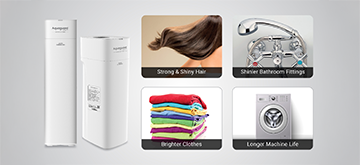
Reduces Hair Fall
Experts believe that the presence of calcium and magnesium in hard water may result in the accumulation of deposits on the scalp, which blocks the scalp from absorbing the moisturiser from the hair conditioners, contributing to frizz and dullness. This buildup can also lead to an itchy scalp. A water softener can tackle the high minerals in your water and prevent hair fall.Prevents Rough Skin
Hard water is not just harmful for hair follicles but also for skin. Experts believe that hard water can lead to skin dryness and irritation, primarily due to the skin’s inability to dissolve soap. The residue of unrinsed soap tends to strip off the skin of its natural oils, resulting in dry and itchy skin. Moreover, excess minerals present in hard water can directly dry the skin, causing pore blockages and acne breakouts. A water softener solves this problem by providing you with soft water.Protects Bathroom Fixtures
Over time, minerals from hard water, such as calcium and magnesium, can accumulate on bathroom fixtures, causing potential damage. By removing harmful minerals from your water, water softeners shield your systems and fixtures from harm.Increases the Lifespan of Appliances
Hard water may lead to the buildup of mineral deposits in home appliances like water heaters, dishwashers, and washing machines. You may avoid these deposits and increase the longevity of your equipment by utilizing a water softener.Reduces Scale Buildup
Hard water can leave ugly and challenging-to-clean scale deposits on faucets, showerheads, and other bathroom fixtures. You may reduce scale buildup and improve the efficiency of cleaning operations by utilizing a water softener.Brighter, Softer Laundry
When clothes are washed in hard water, their colour and softness are adversely affected. Using hard water for laundry can lead to fabric discolouration, making it look grey.1 A water softener helps minimise the effects of hard water on laundry.
Understanding the Long-Term Savings of Installing a Water Softener
- Extends appliance life: A water softener for the home prevents limescale buildup in geysers, washing machines, and dishwashers, reducing wear and tear and helping appliances last longer.
- Lower repair and replacement costs: By protecting internal components from hard water damage, water softeners reduce the need for frequent servicing and costly repairs.
- Improves appliance efficiency: Appliances run more efficiently with soft water, using less energy to heat or operate, which can lead to lower electricity bills over time.
- Protects bathroom fittings and ceramics: Soft water prevents stains, scaling, and dullness on taps, tiles, and sanitary ware, keeping them cleaner and newer for longer.
- Reduces cleaning effort and product use: With less limescale and soap scum, households use fewer cleaning products and spend less time on maintenance.
- Cost-effective long-term solution: While there is an initial investment, a water softener for the home delivers long-term savings through reduced maintenance, lower energy use, and improved appliance durability.
Conclusion
To sum up, the advantages of having a water softener system surpass the instant gratification of smoother skin or spotless dishes. Home water softeners are essential for maintaining appliance efficiency, improving the quality of water in the entire house, and saving money over the long run.
If you’re considering a reliable water softener for your house, modern systems offer advanced features that make everyday use simple and efficient. Some models are fully automatic, meaning there is no need for manual regeneration or frequent monitoring.
Some examples of good products are-
This model is well-suited for individual homes and small apartments. It uses advanced ion-exchange technology to effectively remove hardness-causing minerals such as calcium and magnesium from water. The system operates automatically, so there is no need for manual regeneration. Its compact design allows easy installation even in limited spaces, while smart regeneration cycles help optimise salt and water usage. The result is consistently soft water for daily use, with lower maintenance effort and reduced running costs.
Designed for medium-sized households, this water softener offers a higher capacity to handle increased water demand. It comes with multiple regeneration modes, allowing the system to adjust based on actual water usage, which helps prevent unnecessary salt and water consumption.
Many Aquaguard water softeners also include smart features such as IntelliMix Technology to reduce water wastage, easy-to-read LCD display panels for clear system updates, and holiday modes that switch the system to standby when not in use.
Purchasing a water softener is an intelligent and worthwhile decision for homes looking for a workable solution to the problems caused by hard water.
Frequently Asked Questions
1. How is hard water a problem at home?
While it is safe for consumption, hard water minerals can lead to scale buildup in pipes, taps, and appliances. Over time, this may affect appliance efficiency, increase cleaning effort, and contribute to issues such as soap residue and dull-looking fixtures.
2. How can I tell if my home has hard water?
Several everyday signs may indicate hard water:
- White or chalky deposits on taps and showerheads
- Reduced lather from soaps and shampoos
- Stiff or dull laundry after washing
- Frequent scaling in kettles or geysers
- Dry-feeling skin or rough hair
For precise confirmation, a water hardness test or TDS analysis can provide clarity.
3. Does a water softener make water safe for drinking?
Water softeners are primarily designed to reduce hardness by removing calcium and magnesium. They are not substitutes for drinking water purification systems. For potable water, a dedicated purifier such as an RO or UV system is typically recommended alongside a softener.
Reference
- Sekhri, S., & Gupta, N. (2016). Water quality considerations for better laundry. ResearchGate. https://www.researchgate.net/publication/354583257_Water_quality_considerations_for_better_laundry /Accessed on 15/02/2024.
