Air Purifier for Babies & Toddlers: What Parents Need to Know
PUBLISHED ON: 08-Jun-2026
Key Takeaways
- Babies and toddlers are especially sensitive to indoor pollutants as their lungs and immune systems are still developing.
- Common pollutants found in nurseries include pet dander, pollen, and volatile organic compounds (VOCs).
- It is important to consider factors such as CADR, noise level, and advanced filtration when purchasing an air purifier for a baby’s room.
Today, outdoor air quality ranges from poor to severe throughout the year and becomes worse, especially in India during winter months, leading many parents to keep their babies indoors to protect them from harmful air pollution. This concern is understandable, as breathing city air during peak pollution has been compared to smoking 50 cigarettes a day¹
However, indoor air quality is often overlooked, which can remain poor despite regular cleaning and precautions such as keeping windows closed during periods of high pollution.
This is where the air purifiers for the home become important, especially for a baby's room or nursery.
This blog provides a comprehensive guide to help parents understand the suitability, benefits, and key considerations of using air purifiers for babies and nurseries.
Why Are Babies and Toddlers More Vulnerable to Pollution Than Adults?
Babies and toddlers have an immature immune system, and their lungs are still developing. The tiny air sacs in the lungs, known as alveoli, multiply rapidly during the early stages of development. Exposure to pollutants at this stage can interfere with healthy lung development. Additionally, babies and toddlers breathe faster than adults and spend more time indoors playing on the floor. Floors may contain settled dust and allergens, which can enter the respiratory tract and affect the little one’s health.
Common Types of Pollutants in the Nursery Air
Most parents try to maintain a clean nursery, but certain indoor pollutants may still persist despite regular cleaning. The table below gives a brief overview of common pollutants, their sources, and possible risks to babies and toddlers.
| Common Pollutants | Sources | Risks to Babies and Toddlers |
| Particulate matter (PM 2.5) | Cooking fumes, incense sticks, and candles from the adjoining rooms. | Due to the fine size of particulate matter, it can get into the lungs and can cause issues like asthma. |
| Volatile organic compounds (VOCs) | New furniture, primers, and fresh paint. | They can irritate the eyes, nose, and throat and worsen respiratory sensitivity in infants. |
| Pet dander | Pets like cats and dogs shed microscopic skin flakes that get settled on surfaces like beds. | It can cause an allergy in the infants. |
| Mould spores | Damp walls or poor ventilation in the nursery. | Mould spores can trigger allergic reactions in infants and prolonged exposure can have a higher rate of wheezing. |
| Carbon dioxide (CO2) | Can accumulate in poorly ventilated nursery rooms. | Higher CO2 levels can contribute to poor sleep quality and reduced cognitive abilities in growing children. |
What to Look For In a Baby/Toddler-Safe Air Purifier?
When choosing the best air purifier for a baby's room, parents need to consider several important factors, as babies and toddlers are more prone to health risks such as asthma and allergies. These factors include:
HEPA Filtration:
Choosing an air purifier with a HEPA filter can help trap particles as small as 0.3 microns, such as particulate matter PM2.5& PM10 and other dust particles like pet dander.
Advanced Filtration:
You can also look for other advanced technologies, such as activated carbon filters, which can help reduce odours and smoke residues commonly found indoors, and plasma filtration, which provides an additional layer of security against harmful microbes.
CADR for the Room Size:
CADR (clean air delivery rate) measures how swiftly an air purifier can clean the air in a room. A higher CADR generally means faster removal of pollutants. However, the CADR should be appropriate for room size. For example, if the room is large and the CADR value is too low, the purifier may struggle to effectively clean the air for your baby.
Noise Levels:
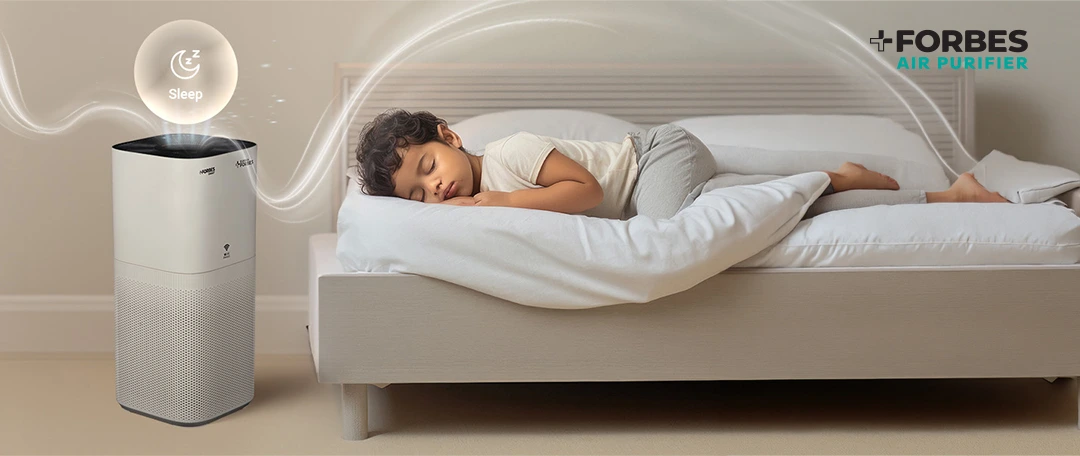
Babies and toddlers require approximately 11-17 hours of sleep for healthy physical and mental development. Since they are sensitive to sound, an air purifier running at high speed and producing excessive noise may cause discomfort and disrupt their sleep. It is recommended to buy an air purifier with a sleep mode or one that operates below 66 decibels for quieter operation.
Child Lock:
Toddlers are naturally curious and may try to touch or tamper with the air purifier’s controls. Therefore, it is recommended to choose an air purifier with a child lock feature for added safety and uninterrupted operation.
Reliable Post Installation Service:
Over time, filters may get clogged with pollutants, reducing the efficiency of the purifier. Therefore, it is necessary to clean or replace filters timely. For instance, a pre-filter should be cleaned in 2-3 weeks, and HEPA filters should be replaced within 6-12 months. It is advised to buy products from a reliable brand with reliable post-installation support.
WiFi Enabled Operation:
It allows easy control of the air purifier through a smartphone application, resulting in little to no manual switching between the modes.
Which Air Purifier Should You Choose?
Now that you understand why air purifiers are important for little ones, let’s explore some of the best air purifiers for a baby’s room that parents can choose from based on specific needs and room requirements.
1. Eureka Forbes 230 Surround 360°Air Purifier
|
2. Eureka Forbes 270 Surround 360° Air Purifier
|
Where Should You Place Your Air Purifier in the Nursery?
Just buying an appropriate air purifier is not enough; parents should place the air purifier in the right spot to ensure proper air circulation.
- Place the air purifier near the crib, but not directly beside it.
- Avoid placing it in a corner, as this can restrict proper air circulation.
- Ensure the air purifier and its electrical connections remain out of a toddler’s reach.
- Position the air purifier toward the interior of the room rather than near a door, as frequent door opening can allow unfiltered air to enter and reduce purification efficiency.
Everyday Hygiene Practices for the Nursery Room
- Wash bed sheets and pillows regularly, as dust and dirt particles can accumulate on them.
- Reduce indoor dust accumulation through daily vacuuming rather than dry sweeping.
- Open windows and doors, if the outdoor air quality is satisfactory, to help dilute indoor air pollution.
- Avoid using highly fragranced air fresheners and incense sticks, as they may release particles that can irritate the child’s nose or throat.
- Control excess indoor humidity, as it can encourage mould growth.
Conclusion
A nursery is a child’s safe space, and air quality plays an important role in creating a healthy and comfortable environment. For babies and toddlers to grow and develop well, maintaining good indoor air quality is essential.
While routine cleaning helps maintain hygiene, it may not effectively remove fine airborne particles such as particulate matter. This is where an air purifier for the home can become a valuable addition. However, parents should ensure they choose an air purifier that is suitable for their home and nursery size to support proper air circulation and cleaner indoor air.
Frequently Asked Questions (FAQs)
Is it safe to run an air purifier in a baby’s room all night?
Yes, especially models with sleep mode and advanced filtration technology, which help ensure your child breathes cleaner air throughout the night.
At what age should I start using an air purifier in my child’s room?
An air purifier can be used from infancy, especially in houses located in dusty or polluted environments.
Does an air purifier need to be running before I put my baby to sleep, or can I turn it on when I put them down?
It is recommended to turn on the air purifier before putting your baby to sleep, as this can help improve air circulation and reduce indoor pollutants in the room.
References:
