Robotic vacuum cleaners and their technologies explained
PUBLISHED ON: 16-Mar-2022
Key Takeaways
- Robotic vacuum cleaners rely on sensors and navigation logic to clean floors autonomously with minimal human intervention.
- Features such as wet and dry cleaning, scheduled operation, and adaptive suction greatly improve everyday convenience.
- Multi-surface compatibility is essential for homes with varied flooring like tiles, marble, wood, or carpets.
- Battery life and auto-recharging capabilities play a crucial role in uninterrupted and efficient cleaning cycles.
Robotic vacuum cleaners are no longer futuristic gadgets. They have steadily become a practical cleaning companion for modern homes, especially where daily schedules leave little time for manual cleaning.
Designed to operate with minimal human intervention, robotic vacuums combine sensors, navigation logic, and automated cleaning patterns to maintain floors effortlessly.
But how do these compact devices actually work, and what technologies make them effective? In this blog, we understand the key technologies behind robotic vacuum cleaners and explain what truly matters when choosing one for your home.
How Do Robot Vacuums Work?
At their core, robotic vacuum cleaners are designed to clean floors independently. Once activated, the cleaner scans its surroundings, detects obstacles, and follows pre-set or adaptive movement patterns to cover inaccessible areas and tight spaces.
Rather than random motion alone, modern units combine multiple technologies, including sensor systems, navigation algorithms, and suction mechanisms, to deliver consistent cleaning results. This is what allows a self cleaning robot to operate with very little human intervention.
Like most robotic machinery, these floor cleaning machines function using a set of pre-programmed instructions.
Smart Sensors
Vacuum robots are equipped with a range of sensors for object recognition in the path. The infrared beams help sense the proximity of potential obstacles to avoid collision.
Anti-fall sensors prevent the robot vacuum from falling from high areas as they can detect the height through their sensors.
Great Accessibility
Robotic vacuums have impeccable accessibility. They can easily slide and navigate under furniture like couches without human intervention.
Compact Size and Design
A robotic vacuum cleaner's compact size and design enable it to reach areas and corners of the room that would otherwise be inaccessible with traditional cleaning methods or with a hand-held vacuum cleaner.
With a minimal and highly functional design, coupled with engineering finesse, robotic vacuum cleaners feature several different cleaning modes like spiral, edge, and zig-zag so that you can rest assured that every nook and corner of your space is being tidied up.
What to Look for When Buying the Best Robot Vacuum Cleaner?
To assist you in searching for the best robot vacuum cleaner in India, here’s a compiled list of the main features to consider when making your decision to buy a robotic vacuum cleaner. .
1. Wet and Dry Cleaning Function
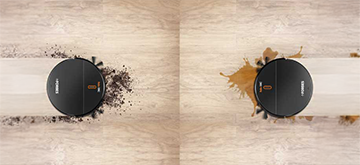
Dirt and debris come in all forms and rest particularly in difficult corners of your home. Having to reset your robot every time you want it to focus on cleaning a particular spot or an edge can get really tiring and futile! The Robo Vac N Mop has a dual function, it can clean wet surfaces just as quickly as dry surfaces.
The robo vacuum gets rid of dry dust, dirt, and debris with powerful suction and uses a highly absorbent, reusable microfiber cloth to mop wet spills and stains before they do much damage.
This robotic vacuum cleaner offers a range of cleaning modes and patterns that significantly impact the effectiveness and coverage area for cleaning. The Forbes Robo Vac n Mop Cleaner packs in these cleaning modes and functions to ensure that you have spotless floors every time:
Spot-Cleaning Mode
The vacuum moves and cleans intensively in a spiral until every bit of dust is picked up. This works particularly well for getting tough dust and stains out. The Spot cleaning function is ideal for cleaning up kitchen messes and accidental spills.
Edge Cleaning Mode
This mode focuses on areas where dust typically accumulates, along walls, skirting, and around furniture such as beds and tables. The vacuum moves closer to the wall and cleans every corner and edge of your house with precision, leaving no dirt behind.
Scheduled Cleaning Mode
This mode lets you schedule your vacuum cleaning daily for a regular, smooth cleaning routine. You can schedule it in a way that the cleaner turns on and cleans the house by itself when you leave for work or during a specific part of the day.
2. Multi-surface cleaner with powerful suction
Always go for robotic vacuums to clean multiple floor types - carpeted, wooden, tiled, and marble flooring.
A robotic vacuum cleaner, such as the Forbes Robo Vac n Mop Vacuum Cleaner, can automatically adjust its suction power to clean different surfaces efficiently. For instance, if your home has rugs or wooden flooring in a particular room while cleaning, the Forbes Robo Vac n Mop will detect the difference in surfaces and clean them by adjusting its suction power.
Intelligent cleaners like Robo Vac n Mop offer multi-cleaning modes which have adjustable speeds, brush rotation speed, and suction performance up to 2700 PA.
The Auto cleaning mode lets the cleaner adjust cleaning independently, and the edge cleaning feature gets stubborn dust from hard-to-reach surfaces.
3. Battery Life and Auto- Recharging features
Robot vacuum cleaners are powered by batteries that run for a long time, that is, 90 mins. The larger your home, the more battery capacity is required to ensure uninterrupted run time.
Opt for cleaners that offer at least 2600 mAh battery capacity, so a run time of 90 minutes is guaranteed. Even when the battery is low, robotic cleaners automatically find their way to the charging station. Thus, you don’t have to worry about charging your Robo time and again.
4. Remote Controlled Cleaning
Opt for a Robotic vacuum cleaner that provides remote control functionality. This enables you to operate and control your robot with nothing more than a click of a button. Typically, as with any remote control, you can switch on or off the vacuum cleaner and choose one of the many offered cleaning modes.
Conclusion
By combining smart sensors, compact design, adaptive cleaning modes, and automated functions such as scheduled cleaning and auto-recharging, these floor cleaning machines simplify the most repetitive household chores of cleaning.
When chosen carefully, a robotic vacuum cleaner can maintain everyday cleanliness with minimal effort, whether it is handling fine dust, reaching under furniture, or managing occasional spills with wet and dry functionality. The key lies in understanding your home’s layout, floor types, and cleaning expectations rather than focusing only on specifications.
As homes continue to adopt smarter appliances, robotic vacuum cleaners are steadily becoming an integral part of modern living, offering convenience, consistency, and time savings.
Frequently Asked Questions
Can a robotic vacuum cleaner replace traditional vacuum cleaning completely?
Robotic vacuum cleaners are excellent for daily maintenance cleaning, helping manage dust, hair, and small debris. However, deep cleaning tasks, upholstery, stairs, and tight corners may still require a traditional vacuum cleaner from time to time.
Do robotic vacuum cleaners work well on Indian home floor types?
Yes, most modern robotic vacuum cleaners are designed to handle common floor surfaces such as tiles, marble, wooden flooring, and low-pile carpets. It is important to choose a model suited for mixed surfaces if your home has varied flooring.
How much maintenance does a robotic vacuum cleaner require?
Maintenance is generally minimal. Users typically need to empty the dustbin, clean brushes, and wipe sensors periodically. Regular upkeep ensures consistent suction performance and longer device life.
